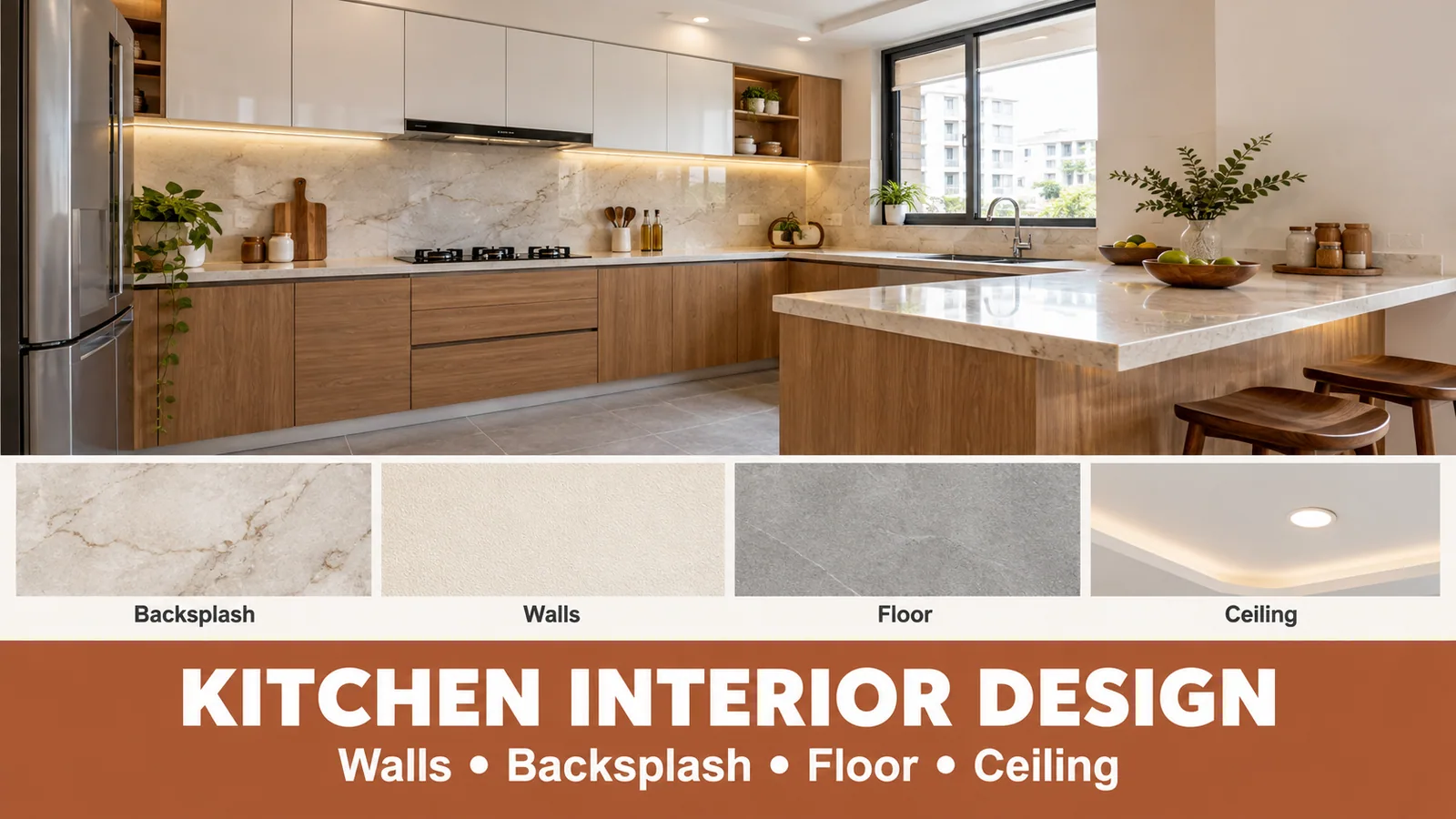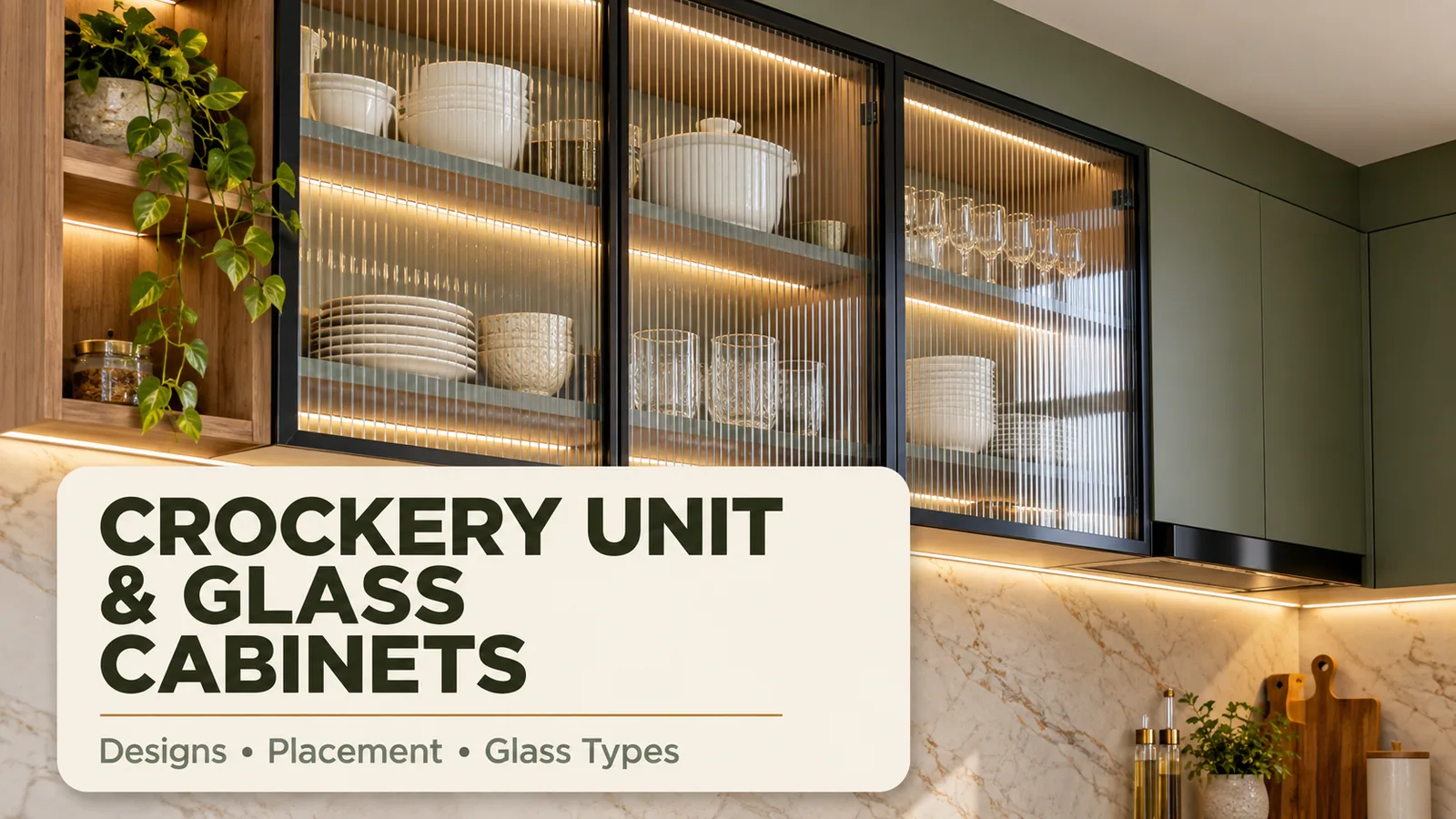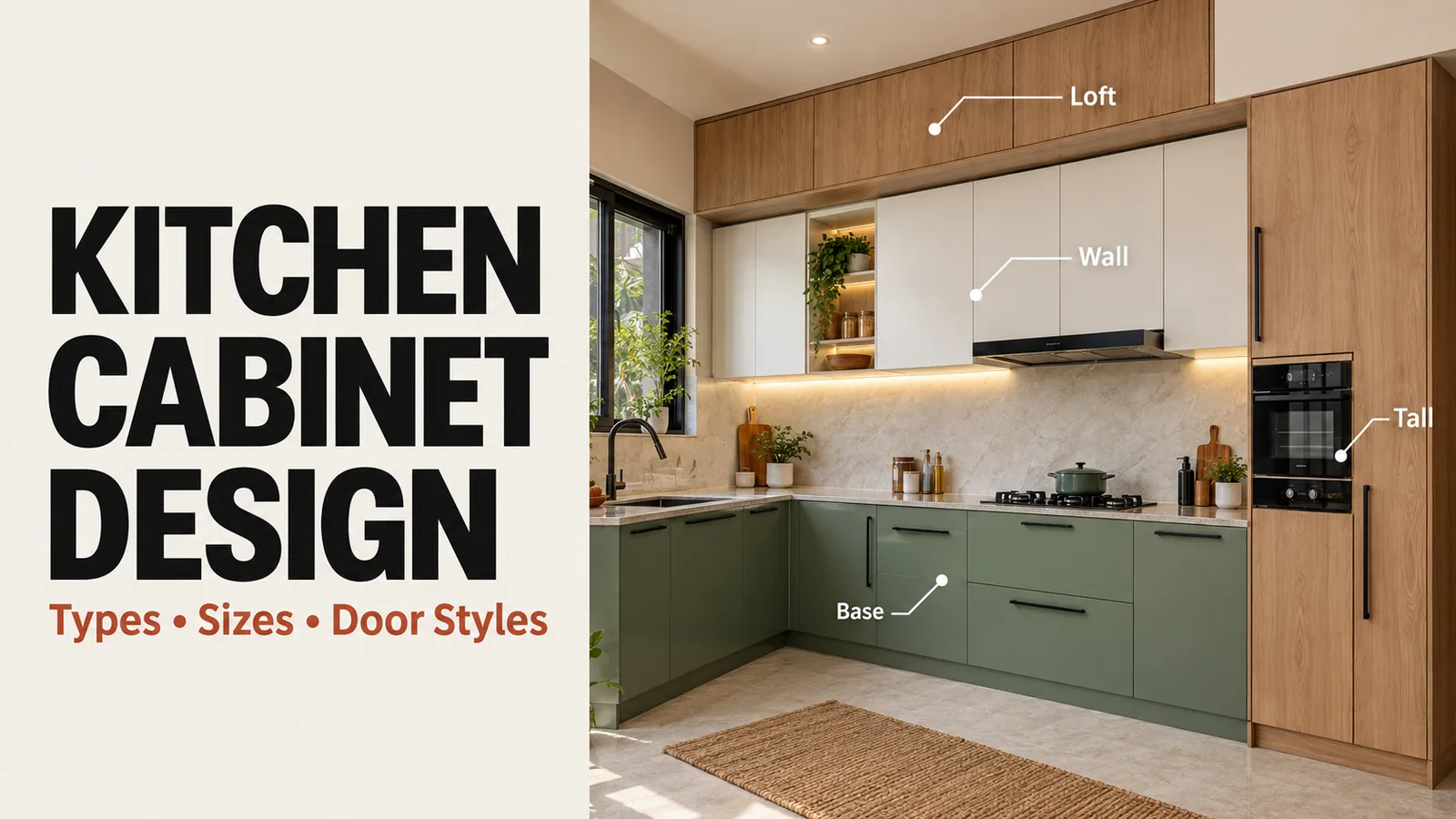
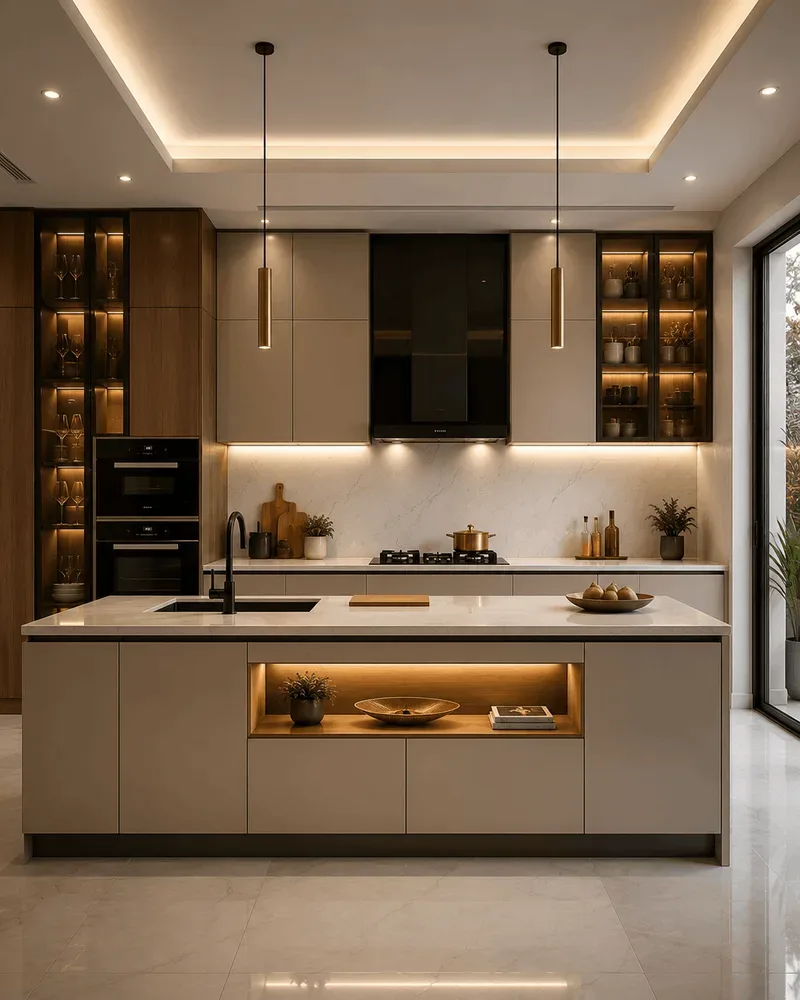
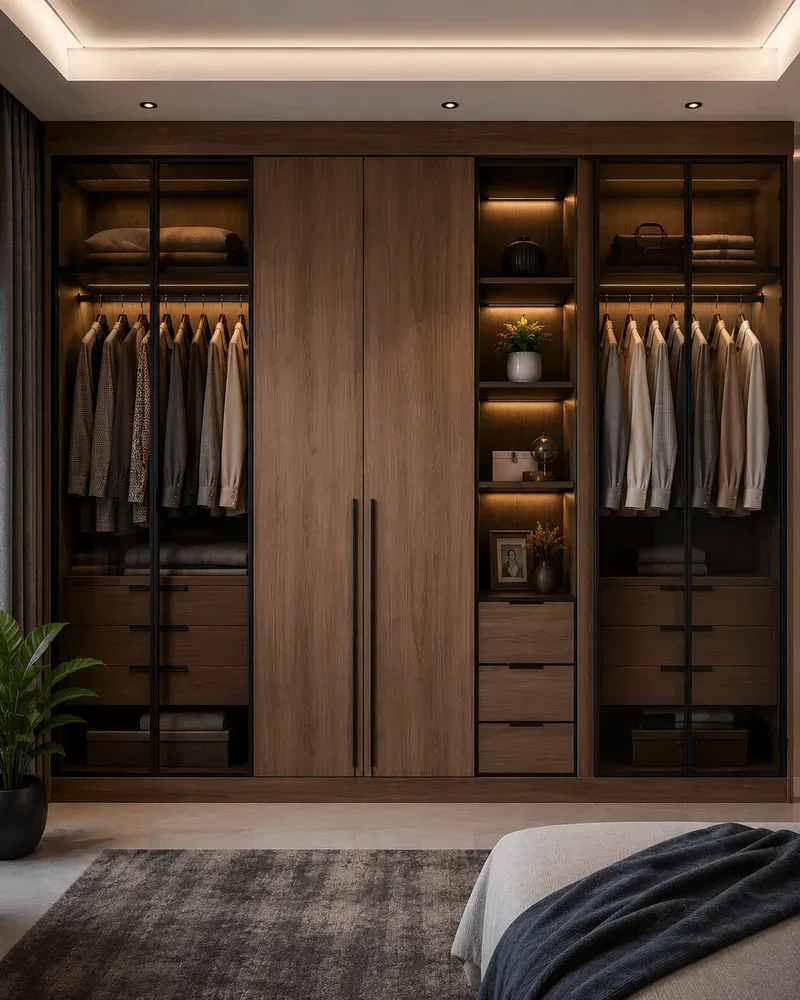

The shutter finish is what you see and touch every day, so it decides how your kitchen looks and how much wiping it needs. For most Indian kitchens, laminate is the most economical and forgiving choice. Acrylic, PU paint and painted gloss give a smoother, more premium look at a higher price. Glass works best on a few wall cabinets rather than across the whole kitchen. Matte or gloss is a separate choice that changes how visible fingerprints and scratches are.
Below is how each finish compares, and how to combine them sensibly.
Finish Is Not the Same as Board
A shutter is a base board with a surface finish on top. Plywood, HDHMR and MDF are boards, not finishes; they decide strength and moisture resistance. Laminate, acrylic, PU paint, painted gloss and glass are the surfaces. Choose the board first using our modular kitchen materials guide, then choose the finish that goes on it.
Modular Kitchen Finishes Compared
Finish | Look | Cleaning | Daily wear | Relative cost |
|---|---|---|---|---|
Laminate | Matte, gloss, textured, woodgrain or solid colours | Easy; hides marks well in matte | Good resistance to scratches and stains | Most economical |
Acrylic | Very high gloss, mirror-like, uniform colour | Needs regular wiping; shows fingerprints | Scratches show on the gloss surface | Higher |
PU paint | Smooth painted look, matte or gloss, any shade | Easy to wipe | Durable coating when applied on a suitable board | Higher |
Painted gloss | Seamless painted high shine | Needs regular wiping | Shows scratches and fingerprints | Higher |
Glass shutters | Glossy, reflective, often back-painted or framed | Easy to wipe but shows smudges | Best kept to wall units, away from knocks | Higher |
As noted on Reedify’s kitchen pages, laminate is the most economical, while acrylic, PU paint and glass shutters move the price up. The actual difference depends on the shutter area and the specific product, which is why it helps to compare modular kitchen quotes line by line.
Laminate: Practical and Most Economical
Laminate is a decorative sheet pressed onto the shutter board. It comes in matte, gloss, textured and woodgrain designs and handles everyday knocks, stains and cleaning well. Matte laminate is especially forgiving in a busy family kitchen because it hides fingerprints and small marks. The edges are the weak point, so edge banding must be sealed properly, especially near the sink.
Acrylic: High Gloss With Upkeep
Acrylic gives a deep, uniform gloss that makes colours look rich and a kitchen look larger. It needs more care: fingerprints show, and fine scratches are visible on the shiny surface. It suits homeowners who want a premium gloss look and are happy to wipe shutters regularly, or who want gloss on upper cabinets and a matte finish lower down.
PU Paint and Painted Gloss: Seamless Colour
PU paint is a polyurethane coating sprayed onto a smooth board, usually MDF or HDHMR. It gives a seamless look in almost any shade, in matte or gloss. Painted gloss is a high-shine painted finish for those who want a smooth, lacquered appearance. Both need a factory spray process for an even result, so they take longer to produce than laminate and cost more.
Glass Shutters: Best Used Selectively
Glass shutters, clear, frosted or back-painted, add reflection and lightness. They are best on a few wall cabinets or a crockery unit, where they are not knocked by vessels or feet. Using glass across base cabinets is rarely practical.
How to Choose Finishes Zone by Zone
Start with how much cleaning you are willing to do every day.
Choose a forgiving finish, such as matte laminate, for base cabinets near the hob and sink.
Use gloss, acrylic or glass on wall cabinets or tall units if you want shine.
Check real samples in daylight and artificial light, not only on screen.
Ask for the finish, brand and shade code to be written on the quote.
Finishes Reedify Offers
Reedify Modulars makes shutters at its own factory in Rohtak in five surface finishes: laminate, acrylic, PU paint, painted gloss and glass, with matte and gloss options. Shutter boards include plywood and HDHMR. We do not offer stone, quartz or veneer shutters; stone and quartz belong to countertops, not shutters. To see finishes in completed kitchens, browse our kitchen portfolio. To choose a finish for your custom modular kitchen, share your plan with our team.