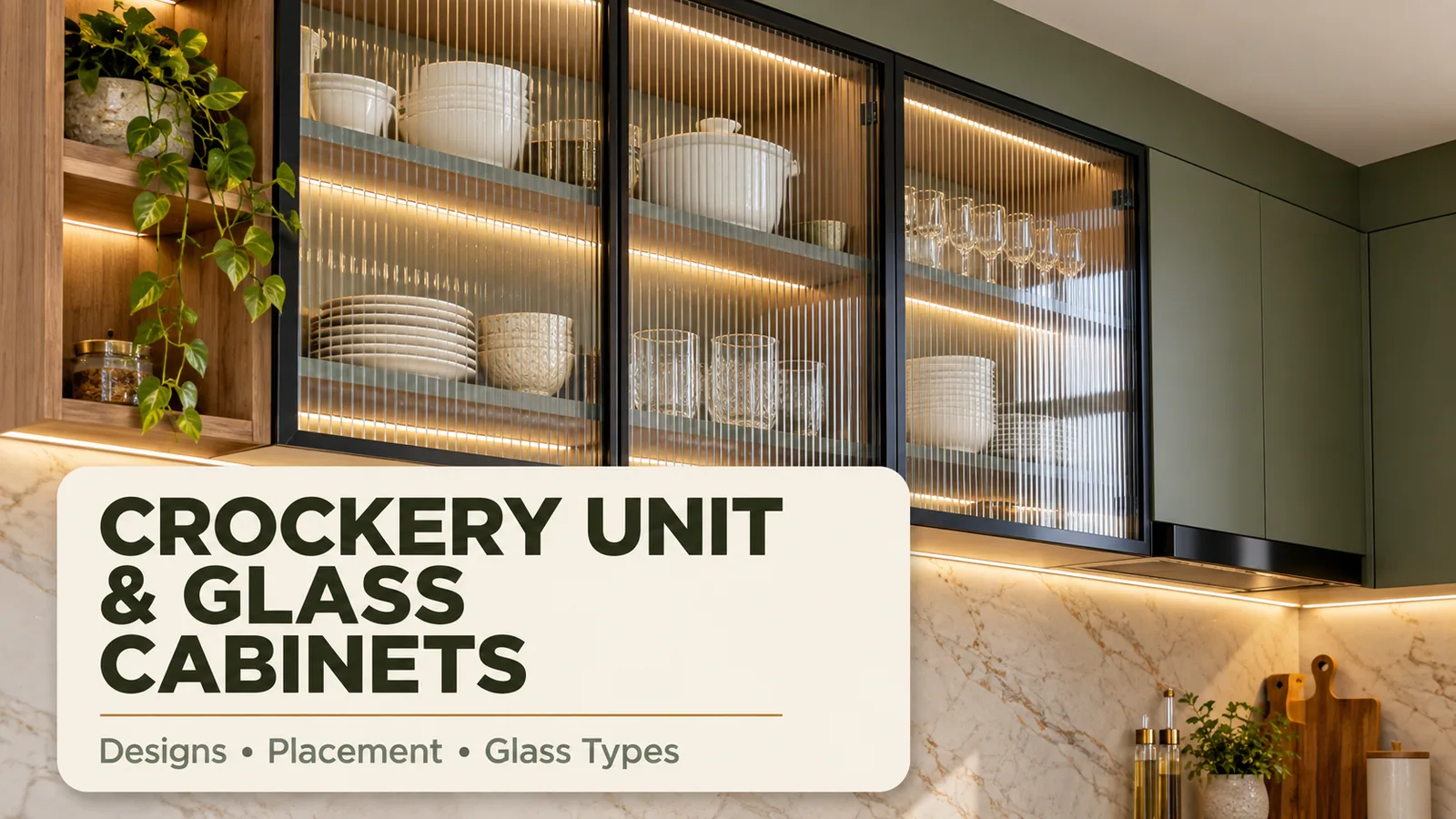
A crockery unit in a modular kitchen is a cabinet dedicated to plates, bowls, glasses and dinner sets, usually with glass doors so the crockery is visible but protected from dust and kitchen grease. The best place for it is away from the hob, close to the sink or the dining side, at a height you can reach safely. A good crockery unit uses toughened glass in slim frames, adjustable shelves spaced for your pieces, soft-close hinges and gentle lighting.
This guide covers where to place a crockery unit, the main design types, the glass options for cabinet doors, shelf planning, lighting and safety.
Key Takeaways
Keep the crockery unit away from the hob, where steam and oil would cloud the glass.
Toughened glass in an aluminium or profile frame is the safest and most common choice.
Frosted or fluted glass hides some clutter while still adding depth.
Adjustable shelves let you fit plates, bowls and tall glasses properly.
Store everyday crockery near the sink and special dinner sets higher up or in a separate unit.
Where to Place a Crockery Unit
Position | Why it works | Watch out for |
|---|---|---|
Wall unit near the sink | Wash, dry and put away in one place | Keep heavy plates on lower shelves |
Wall unit on the dining side | Easy to serve and set the table | Needs a clear route from the sink |
Tall unit with glass doors | Large capacity and a striking display | Uses floor space; plan shelf heights |
Counter-height hutch or bar unit | Display plus a serving top | Needs counter length or a dining wall |
Separate unit in the dining area | Keeps special sets away from cooking | Outside the kitchen plan; coordinate finishes |
Avoid placing glass crockery cabinets directly beside or above the hob. Heat, steam and oil mist cloud glass quickly and make daily cleaning harder.
Crockery Unit Design Types
Glass-front wall cabinets
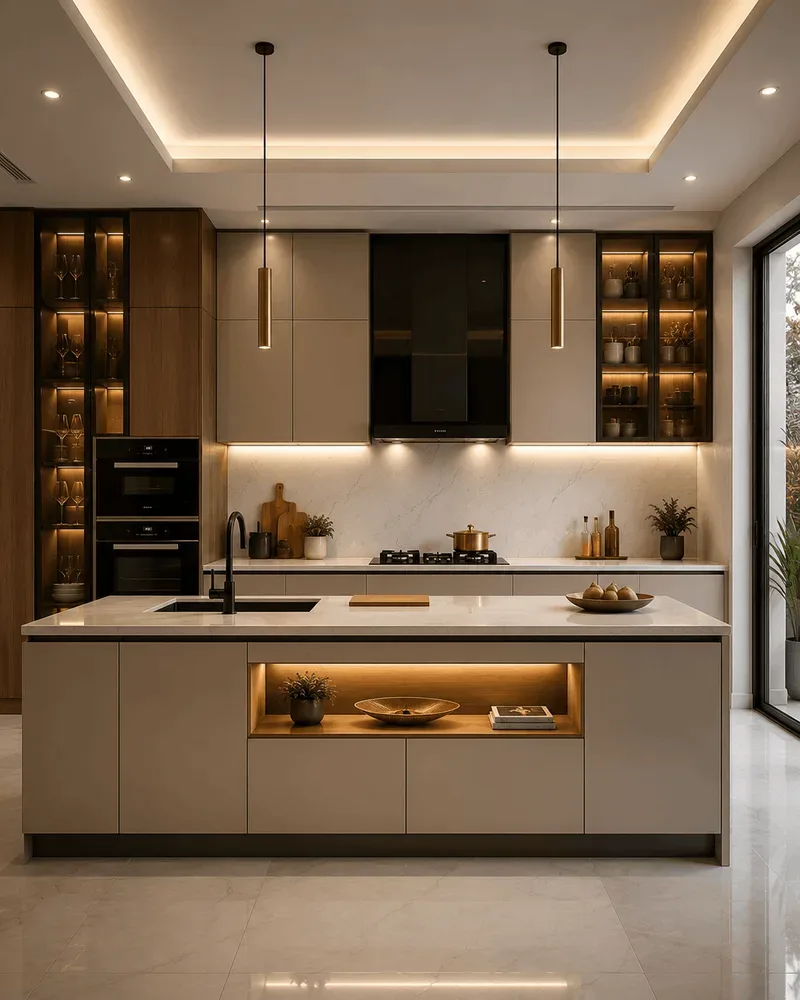
The most common choice in modular kitchens: a few wall cabinets with glass doors in a run of solid cabinets. It adds depth without extra floor space.
Tall crockery unit
A full-height cabinet with glass doors on top and drawers or solid doors below. The lower part stores trays, cutlery and table linen.
Open display shelves with closed storage below
Good for a few decorative pieces, but keep open shelves away from the hob and limit them to items you clean regularly.
Corner crockery unit
Uses an awkward corner on the dining side, often with curved or angled glass shelves.
Drawer-based plate storage
Deep drawers with peg organisers hold plates securely and are easier to reach than high shelves for everyday crockery.
Glass Types for Kitchen Cabinet Doors
Glass | Look | Best for |
|---|---|---|
Clear toughened | Fully transparent | Showing off neat, matching crockery |
Frosted | Soft, translucent | Hiding mixed or cluttered contents |
Fluted or reeded | Vertical ribs that blur the view | A modern, textured look with privacy |
Tinted or smoked | Grey or bronze tint | Dark and premium kitchen palettes |
Back-painted | Solid colour, glossy | A glossy front without showing contents |
Toughened glass is stronger than ordinary glass and breaks into small, less sharp pieces, which makes it the sensible choice for kitchen doors. Ask your supplier to confirm the glass type and thickness on the quote.
Frames, Hinges and Shelves
Frames: slim aluminium profile frames look modern and protect the glass edges; wooden frames suit classic kitchens.
Hinges: use soft-close hinges designed for glass or profile doors so doors do not slam.
Shelves: glass shelves add lightness; sturdy board shelves carry heavy dinner sets better. Keep shelves adjustable.
Shelf spacing: measure your tallest glasses and largest plates before fixing the shelf positions.
Plate racks: vertical racks inside the cabinet hold plates securely and save space.
For hinges, channels and lift-up systems, see our kitchen hardware and accessories guide.
Lighting a Crockery Unit
Soft LED strips inside a glass cabinet, or small lights under each shelf, make crockery glow and add evening ambience. Use warm white, hide the strip in a profile so the dots are not visible, and keep the driver accessible. Plan the wiring before the cabinets are made. Our modular kitchen lighting guide explains how.
Matching the Crockery Unit to Your Kitchen
Use the same frame colour as your handles or profile for a coordinated look.
Pair fluted glass with matte shutters for a modern kitchen.
Use clear glass with wood-grain frames for a warm, classic look.
Keep the number of glass doors small so they stand out rather than dominate.
For shutter finishes to pair with glass, read our kitchen finishes comparison.
Crockery Storage Plan: What Goes Where
Item | Best place | Storage type |
|---|---|---|
Everyday plates and bowls | Wall unit or drawer near the sink | Plate rack or peg drawer |
Daily glasses and cups | Wall unit at eye level | Shelf with cup hooks or rack |
Thalis and steel plates | Deep drawer near the sink | Vertical plate organiser |
Dinner sets and serving bowls | Glass crockery unit or tall unit | Adjustable shelves |
Rarely used or festive crockery | Upper shelves or loft | Closed boxes inside cabinets |
Crockery Unit Ideas for Small Kitchens
Turn two wall cabinets near the sink into glass-front units rather than adding a separate cabinet.
Use frosted or fluted glass so mixed everyday crockery does not look cluttered.
Keep thalis and heavy plates in a deep base drawer with an organiser instead of high shelves.
Move special dinner sets to a slim unit in the dining area to free kitchen space.
Add a single LED strip to one glass cabinet for a premium touch without extra cost elsewhere.
Keeping Crockery Safe
Store heavy plates on lower shelves and lighter glasses higher up.
Do not overload glass shelves.
Use child locks on lower glass cabinets if young children are at home.
Keep the unit away from the hob and from doors that swing into it.
Clean glass with a soft cloth and mild cleaner; avoid abrasive pads.
Crockery Units in a Reedify Kitchen
Reedify Modulars makes glass shutters as one of its factory finishes, manufactured in its own factory in Rohtak alongside the rest of your kitchen. We plan the crockery unit’s position, shelf spacing and lighting in the 3D design so it fits your crockery and your layout. To plan one in your custom modular kitchen, share your floor plan with our team.