
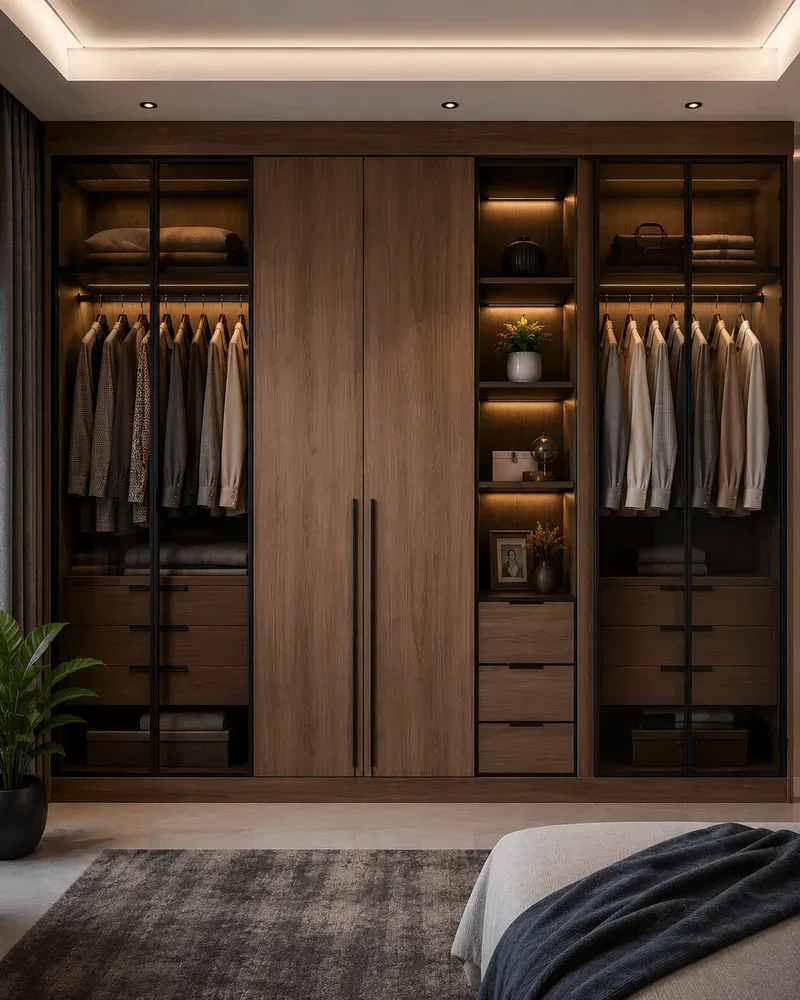

Most wardrobe attention goes to the shutter, the finish, the colour, the handle. But the shutter is the part you look at; the interior is the part you use. A good-looking wardrobe with a badly planned inside becomes a pile of folded clothes on a chair within a month. This is how to plan the interior so it actually fits your life.
Start with an inventory, not a shutter
Before choosing anything, take a rough count of what you own and how it's best stored: how much needs long hanging (dresses, kurtas, coats), how much needs short hanging (shirts, trousers), what's folded (tees, denim, knitwear), and what's boxed or bulky (luggage, bedding, seasonal quilts). This single audit decides the internal split far better than any standard template.
The zones of a well-planned wardrobe
Zone | What it holds | Planning tip |
|---|---|---|
Long hang | Dresses, kurtas, coats, sarees | One full-height section; don't under-size it |
Short / double hang | Shirts, folded trousers | Stack two rails to double capacity |
Drawers | Innerwear, accessories, valuables | Place at waist height for daily reach |
Shelves | Folded tees, denim, knitwear | Adjustable, so the split can change later |
Loft | Luggage, bedding, seasonal wear | Use the height above; plan the door to reach it |
Accessories | Ties, belts, watches, jewellery | Dedicated trays and pull-outs, not a jumbled drawer |
Hanging: the part people under-size
The most common regret is too little hanging and too many shelves. Hung clothes stay wear-ready and crease-free; over-shelving forces folding that most people don't keep up with. A useful habit: double-rail the short-hang zone (two rails, one above the other) to roughly double shirt and trouser capacity in the same width, and keep one generous full-height section for long garments.
Drawers versus shelves
Drawers are best at waist height for things you reach for daily, innerwear, accessories, everyday folded items, and for anything valuable that benefits from a lockable option. Shelves suit bulkier folded stacks and are cheaper per unit of space. Keeping shelves adjustable matters more than it sounds, your storage needs will change, and fixed shelves lock you into today's split.
Loft: using the height you're paying for
In most Indian homes the wall above the wardrobe is wasted, yet it's ideal for suitcases, off-season bedding and quilts. A loft section turns that dead height into real storage. Plan the wardrobe full-height so the loft is integrated rather than a gap collecting dust.
Accessories worth planning in
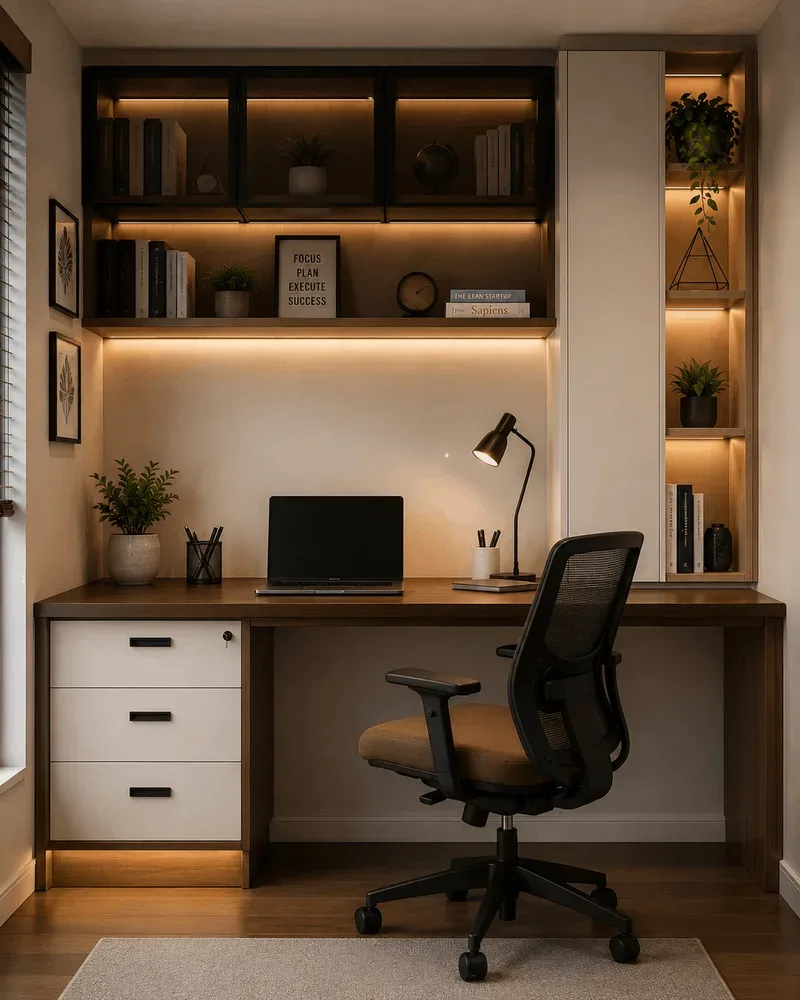
A few internal fittings genuinely earn their place: trouser pull-outs, tie and belt racks, a shoe pull-out, a laundry pull-out, and a mirror. In a shared or master wardrobe, a wardrobe with a dressing table or a wardrobe with a mirror section keeps getting-ready in one place. In a study or kids' room, a wardrobe with a study table uses the wall efficiently. The rule: add the fittings you'll use daily, and skip the novelty ones that look good in a showroom but sit empty at home.
Match the interior to the room and the shutter
The shutter type shapes the interior slightly. With a sliding wardrobe, remember only half opens at once, so keep daily sections reachable on both sides; with a hinged wardrobe, the inner door faces become usable surface for mirrors and racks. Either way, plan the interior to your inventory first, then choose the shutter.


