
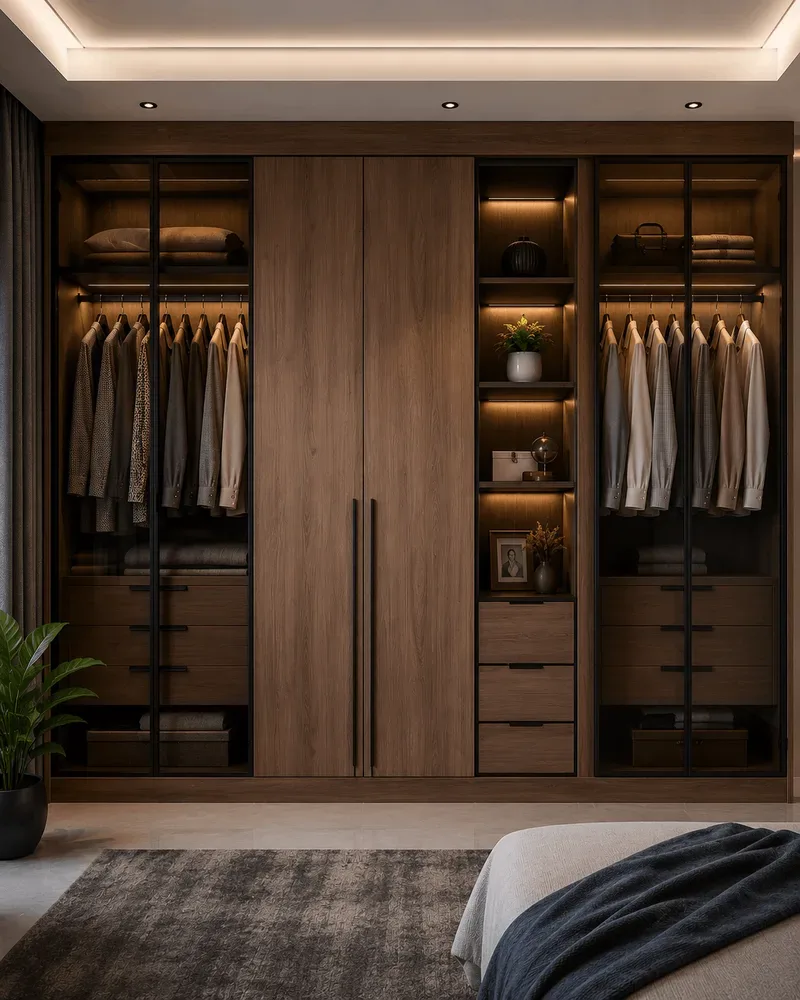
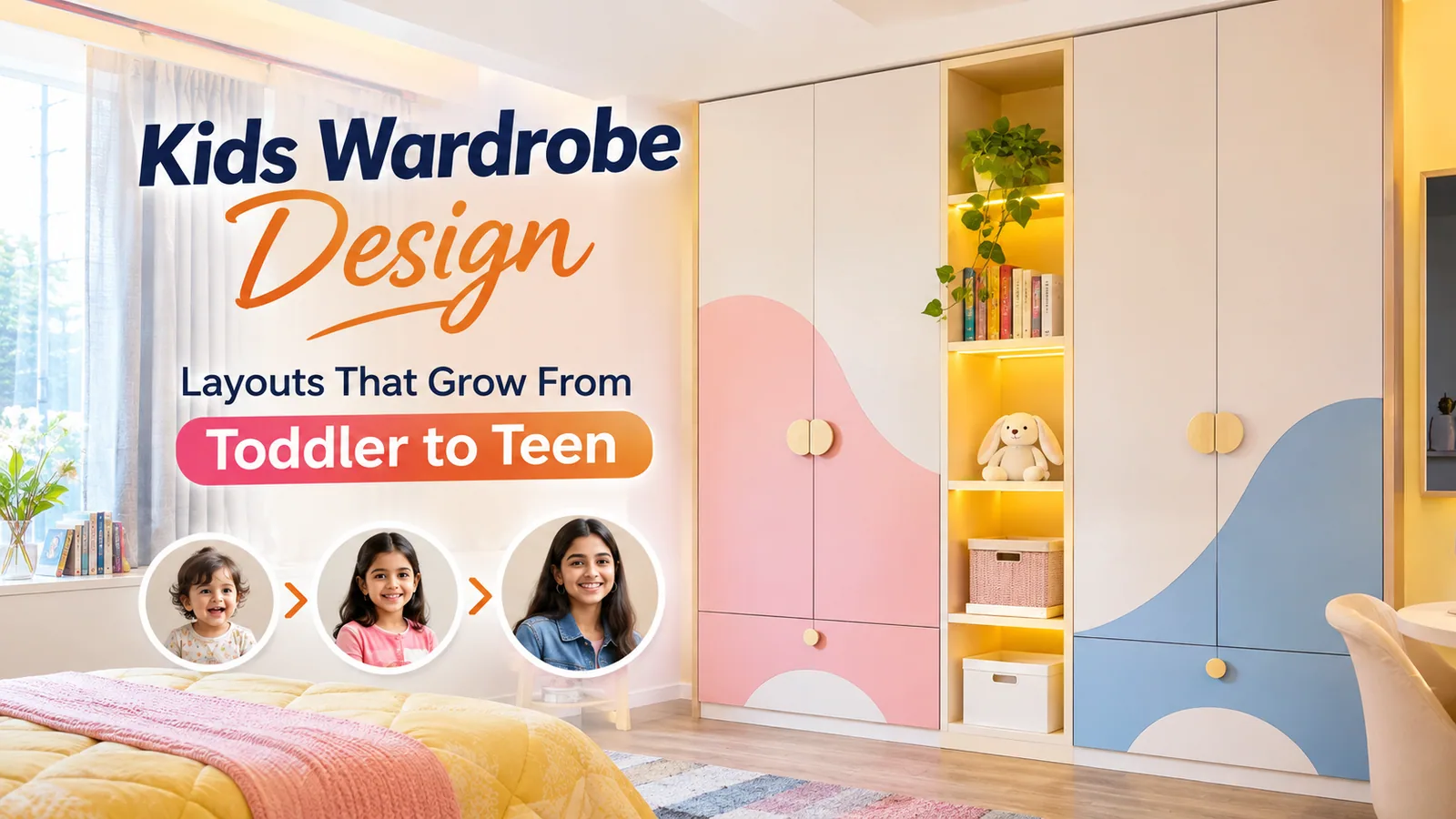
A good kids wardrobe is planned for the child your son or daughter will be in eight years, not just today. That means adjustable shelves, a hanging rod that can move up, a fixed install to the wall, soft-closing shutters and a finish that survives crayons and stickers. Get those five things right and the wardrobe will not need replacing when they start school or become teenagers.
Below is how to plan the inside by age, which designs work in small kids' rooms, and what a made-to-measure kids wardrobe costs.
What a kids wardrobe needs that an adult wardrobe doesn't
Reach. A six-year-old can reach about half the height an adult can. Anything they use daily must sit in the lower part of the wardrobe.
Change. Clothes get longer every year, school bags get bigger, and toys give way to books and sports kit. The inside has to be rearranged without new carpentry.
Safety. Children climb, swing on doors and trap fingers. The unit must be fixed to the wall, and shutters should close slowly.
Wear. Shutters get pencil marks, stickers and wet hands. The finish should wipe clean without dulling.
Plan the inside by age
The figures below are practical starting points. Your 3D design sets the exact positions to your child's height and your ceiling.
Age | Hanging rod height (approx.) | What goes at child height | What goes higher up |
|---|---|---|---|
2–5 years | Around 3 ft (900 mm) | Open shelves or low drawers for daily clothes and toys | Spare bedding, out-of-season clothes |
6–12 years | Around 4 ft (1,200 mm), with a second rod above | School uniform, bag shelf, shoe drawer | Festive clothes, extra blankets |
13+ years | Around 5–5.5 ft (1,500–1,650 mm), like an adult wardrobe | Drawers for daily wear, a long hanging section | Loft for luggage and keepsakes |
The simplest way to make this work is to ask for line-bored side panels. These are rows of small holes drilled in the factory, so shelves and rods can be moved up a few centimetres at a time without drilling the wardrobe again. Reedify drills hardware positions on CNC machines, so the holes line up on both sides of each section.
Drawers versus shelves for young children
Young children find drawers easier than shelves. Clothes don't fall out when they pull one item, and each drawer can be labelled with a picture. For ages 2–8, plan at least two low drawers. Shelves work better from about age 9, when children can fold and stack.
Safety details to ask for
Fix the wardrobe to the wall. A tall unit that a child can climb must be anchored. A built-in modular wardrobe is fitted to the wall during installation.
Soft-close hinges and drawers. Shutters that close slowly protect small fingers. Reedify fits Hettich and Häfele hardware, and the grade is written on your quote.
Rounded or edge-banded corners. Every exposed edge should be sealed and smooth, with no raw board corners at head height.
No glass at low level. Keep mirrors and glass shutters above a young child's head height, or skip them until the teenage years.
Recessed or profile handles. Handles that stick out catch on clothes and foreheads. Profile handles or a handleless design avoid this.
Finishes that survive a child's room
Finish | How it handles kids | Best used for |
|---|---|---|
Laminate (matte or textured) | Hides scuffs, easy to wipe, wide colour range | Main shutters in most kids' rooms |
Acrylic (gloss) | Wipes clean, but shows fingerprints and fine scratches | Upper shutters or one accent panel |
PU paint | Smooth, any colour, but chips are harder to repair at home | Teen rooms where a smooth, joint-free look matters |
For most children's rooms, a matte or textured laminate on the lower shutters is the practical choice. If your child wants a bright colour, put it on one panel or the loft shutters, so the wardrobe can be refreshed later without replacing everything. The wardrobe materials and finishes guide covers the boards behind the shutters.
Kids wardrobe designs that work in small rooms
Kids' rooms in many NCR flats are around 10 × 10 ft, with a bed, a study table and a wardrobe competing for the same walls. These layouts save the most floor space.
Wardrobe with study table
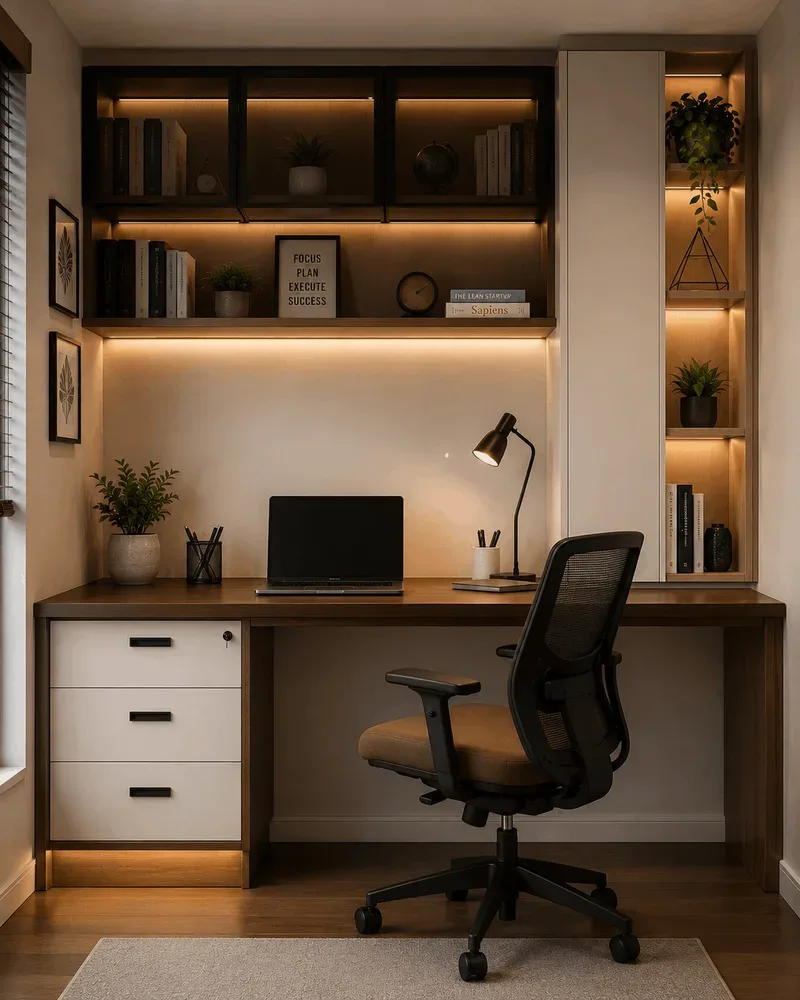
A wardrobe on one side and a desk built into the same unit keeps the floor free for play. Shelves above the desk take books, and the desk height can match a growing child if you plan a removable footrest instead of a lower desk. See wardrobe with study table designs for layouts.
Sliding shutters where the bed is close
If the bed sits less than about 2.5 ft from the wardrobe, hinged doors won't open fully. Sliding shutters solve this, but they need a slightly deeper carcass for the track. Our small bedroom wardrobe ideas post compares both options in tight rooms.
Loft to the ceiling
A loft above the main wardrobe takes suitcases, festival décor and outgrown clothes you are keeping for a younger sibling. It adds storage without taking any floor space.
Shared wardrobe for siblings
For two children in one room, split the wardrobe into two mirror-image halves with separate drawers and a colour or label on each side. It reduces arguments more than any design trick.
Planning checklist before you order
Measure your child's shoulder height today and write it down for the designer
Decide which wall the bed will stay on for the next five years
List what must be stored: uniforms, sports kit, toys, books, bedding
Ask for adjustable shelves and a movable hanging rod
Confirm the wardrobe will be fixed to the wall
Keep glass and mirrors above head height until the teenage years


