

In a small bedroom, the wardrobe and the bed are effectively competing for the same floor. The goal isn't a smaller wardrobe, you still need the storage, it's a wardrobe that adds capacity without stealing the space you walk and sleep in. These are the approaches that reliably work in tight rooms.
Small-room problem, wardrobe solution
The problem | What solves it |
|---|---|
Bed sits close to the wardrobe wall | Sliding shutters, no swing clearance needed |
Room feels cramped and dim | A mirror shutter to reflect light and add depth |
Awkward corner going to waste | A corner wardrobe that turns dead space into storage |
Clutter with nowhere to go | Full-height design with a loft for luggage and bedding |
No room for a separate desk | A wardrobe combined with a study or dressing unit |
Go up, not out
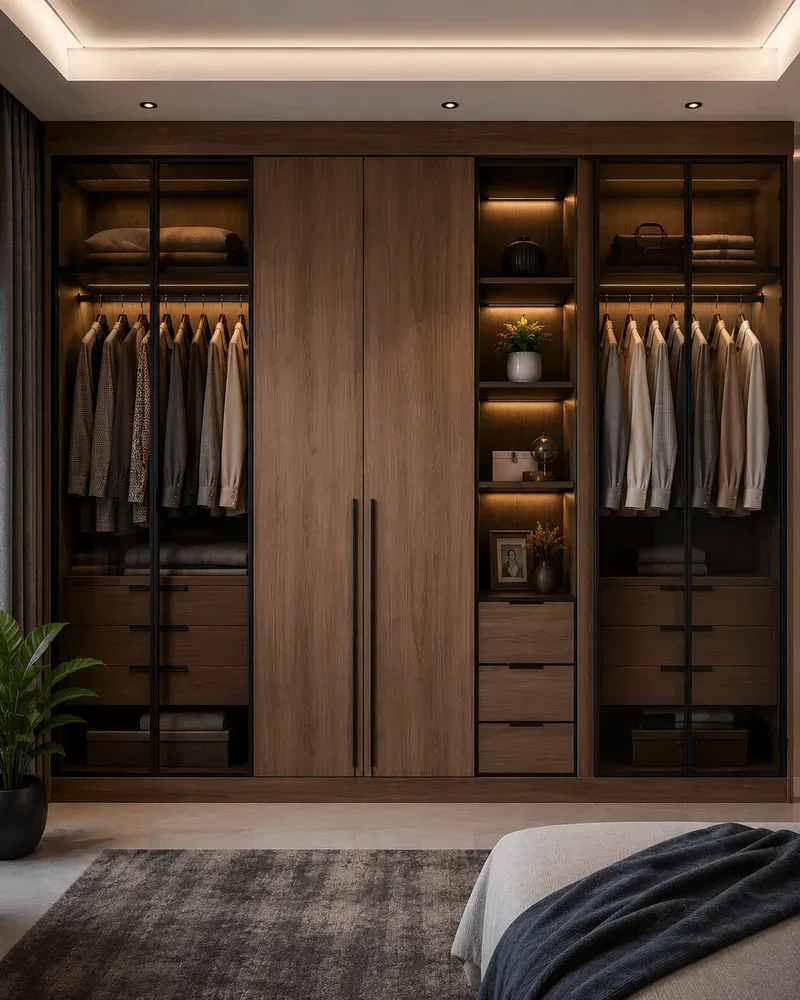
The single most effective move in a small room is to build full-height. Floor area is scarce, but vertical space usually isn't, and a wardrobe that stops short of the ceiling wastes the most valuable storage in the room. Take it to the ceiling and add a loft section for suitcases and seasonal bedding, the things you need rarely but still have to keep somewhere.
Sliding shutters and mirrors
A sliding wardrobe is the default choice for a small bedroom, because the shutters never swing into the room. Pair it with a wardrobe with a mirror shutter and you solve two problems at once: the mirror reflects light to make the room feel larger, and it removes the need for a separate standing mirror that would eat more floor.
Use the corner
Small rooms often have an L-shaped or corner layout where a straight wardrobe leaves an awkward gap. A corner wardrobe wraps that dead corner into usable hanging and shelving, and it can make a modest room hold far more than a single straight run against one wall.
Combine functions
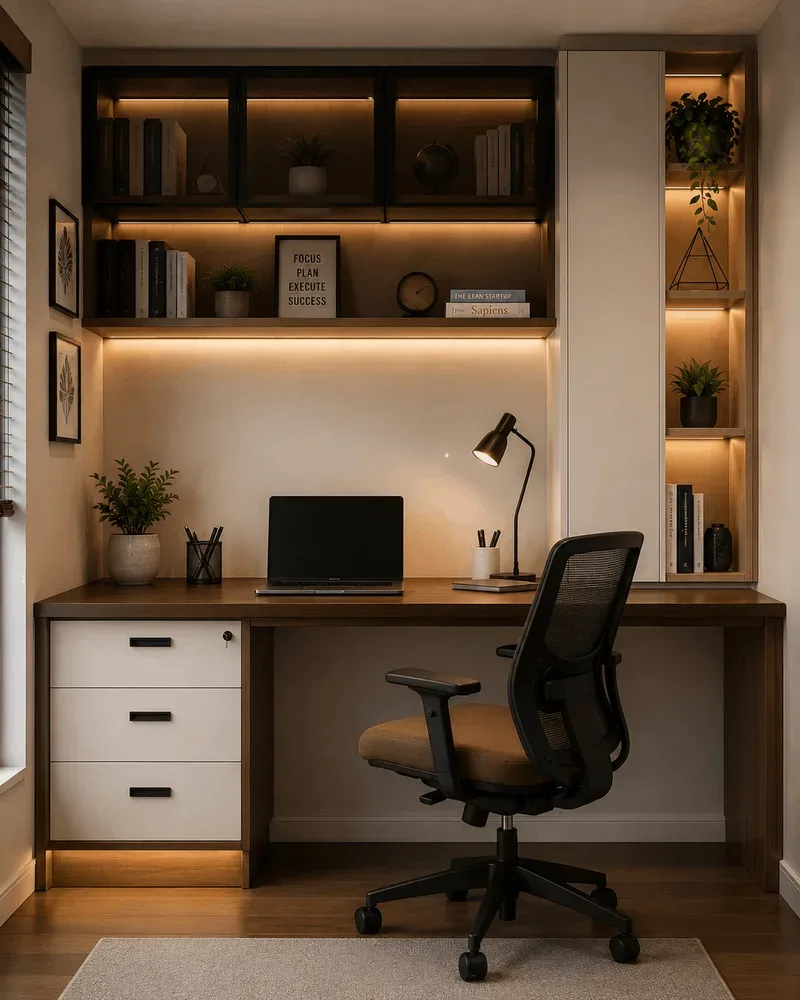
When a room has to do double duty, bedroom plus study, or a guest room, combining units saves the most space. A wardrobe with a study table builds the desk and overhead storage into the same run as the wardrobe, so one wall does the work of three separate pieces of furniture. This is especially useful in a child's room or a compact second bedroom.
Interior tricks for small wardrobes
Double-rail the short-hang zone to fit more shirts and trousers in the same width.
Use pull-outs (trouser, laundry, shoe) so nothing has to be stacked on the floor.
Keep shelves adjustable, a small wardrobe has no room for wasted gaps.
Plan drawers at waist height for daily items, and reserve the loft for rarely used bulk.
Planned this way, a small bedroom can hold a surprising amount. If you want the interior sized to what you own, a custom wardrobe is measured to the exact room rather than fitted from a standard size.


