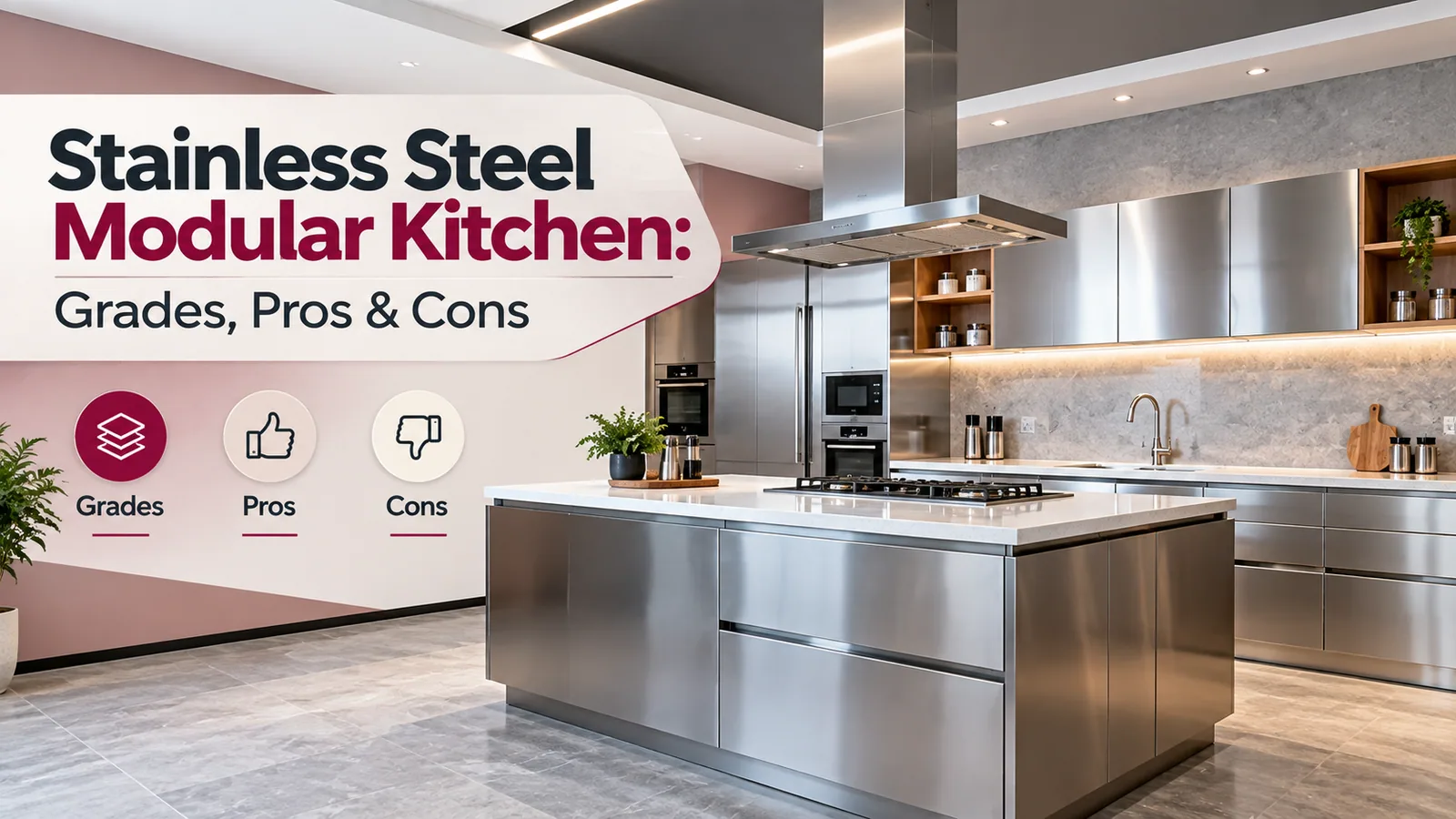
A stainless steel modular kitchen uses steel instead of wood-based board for the cabinet boxes, and sometimes for the shutters as well. Steel does not swell with water, does not attract termites and wipes clean easily, which makes it a strong choice for heavy daily cooking and wet zones like the sink. The trade-offs are a more industrial look, surfaces that can show scratches and dents, and a price that depends heavily on the steel grade.
The single most important thing to check is the grade of steel. This guide explains the grades, the real pros and cons, how steel compares with board kitchens, and what to confirm before you order.
What a Stainless Steel Modular Kitchen Includes
In a steel kitchen, the carcass, meaning the cabinet box, shelves and often the plinth, is made of stainless steel sheet. For shutters, there are two common routes:
Steel shutters, for a fully metal kitchen with a brushed or coated finish.
Finished shutters on a steel carcass, such as laminate, acrylic or PU paint, so the kitchen looks like any modern kitchen outside and is steel inside. Our kitchen finishes comparison explains those surfaces.
Steel Grades: SS 304 vs SS 202 vs SS 430
“Stainless steel” covers several grades with very different corrosion resistance. Ask which grade is used for each part of the kitchen.
Grade | What it is | Corrosion resistance | Typical use |
|---|---|---|---|
SS 304 | Austenitic steel with about 18% chromium and 8% nickel, often called 18/8 or food grade | High | Wet zones, sinks, premium steel kitchens |
SS 202 | Austenitic steel with lower nickel, replaced partly by manganese | Moderate; needs more care in wet, humid or hard-water conditions | Budget applications, drier areas |
SS 430 | Ferritic steel with no nickel; magnetic | Lower than 304 | Decorative or low-exposure parts |
Stainless steel is rust-resistant, not rust-proof. Even SS 304 can mark if harsh chlorine-based cleaners are left on it. But for a sink base that faces water every day, the difference between grades matters over the life of the kitchen.
Advantages of a Stainless Steel Kitchen in Indian Homes
No swelling: a slow leak under the sink cannot make steel swell the way it can with board.
Termite-proof: steel gives termites nothing to feed on.
Hygienic and easy to clean: the non-porous surface wipes clean and does not absorb oil or spills.
Handles heat and heavy vessels: useful near the hob and for pressure cookers and large utensils.
Limitations to Plan For
Look: an all-steel kitchen can feel industrial. Finished shutters on a steel carcass solve this.
Scratches and fingerprints: brushed or matte steel hides marks better than polished steel.
Dents: thin sheet can dent under a heavy knock, so sheet thickness matters.
Sound: metal shutters and drawers can sound louder; soft-close hardware helps.
Cost: depends on grade, sheet thickness and finish, so compare itemised quotes rather than headline prices.
Stainless Steel vs Plywood and Board Kitchens
Factor | Stainless steel carcass | Plywood or engineered board carcass |
|---|---|---|
Water and moisture | Does not swell | Depends on grade and edge sealing |
Termites | Not affected | Depends on board treatment |
Design and finish choice | Steel look, or finished shutters on steel | Widest choice of finishes and colours |
Repairs and changes | Specialist work to modify | Easier to modify or replace a panel |
Feel | Cooler, more industrial | Warmer, more furniture-like |
For more on boards and grades, see our modular kitchen materials guide.
What to Check on a Stainless Steel Kitchen Quote
The steel grade for the carcass, shelves and shutters, written separately.
The sheet thickness for each part.
The surface finish: brushed, matte, polished or coated.
How the cabinets are joined and whether edges are finished safely.
The shutter material and finish, if the shutters are not steel.
The hinges, channels and accessories, with brand and model.
Caring for a Stainless Steel Kitchen
Clean with mild detergent and a soft cloth, wiping in the direction of the grain on brushed steel. Avoid bleach and harsh chlorine-based cleaners, and do not use steel wool. In areas with hard water, wipe surfaces dry after cleaning to prevent white spots.
Stainless Steel Kitchens From Reedify
Reedify Modulars now offers stainless steel kitchens as well as board-based kitchens, manufactured and installed from our factory in Rohtak across Haryana and Delhi NCR. We can plan a full steel kitchen or a hybrid with steel in the wet zones. To discuss a steel or custom modular kitchen, contact the factory with your floor plan.