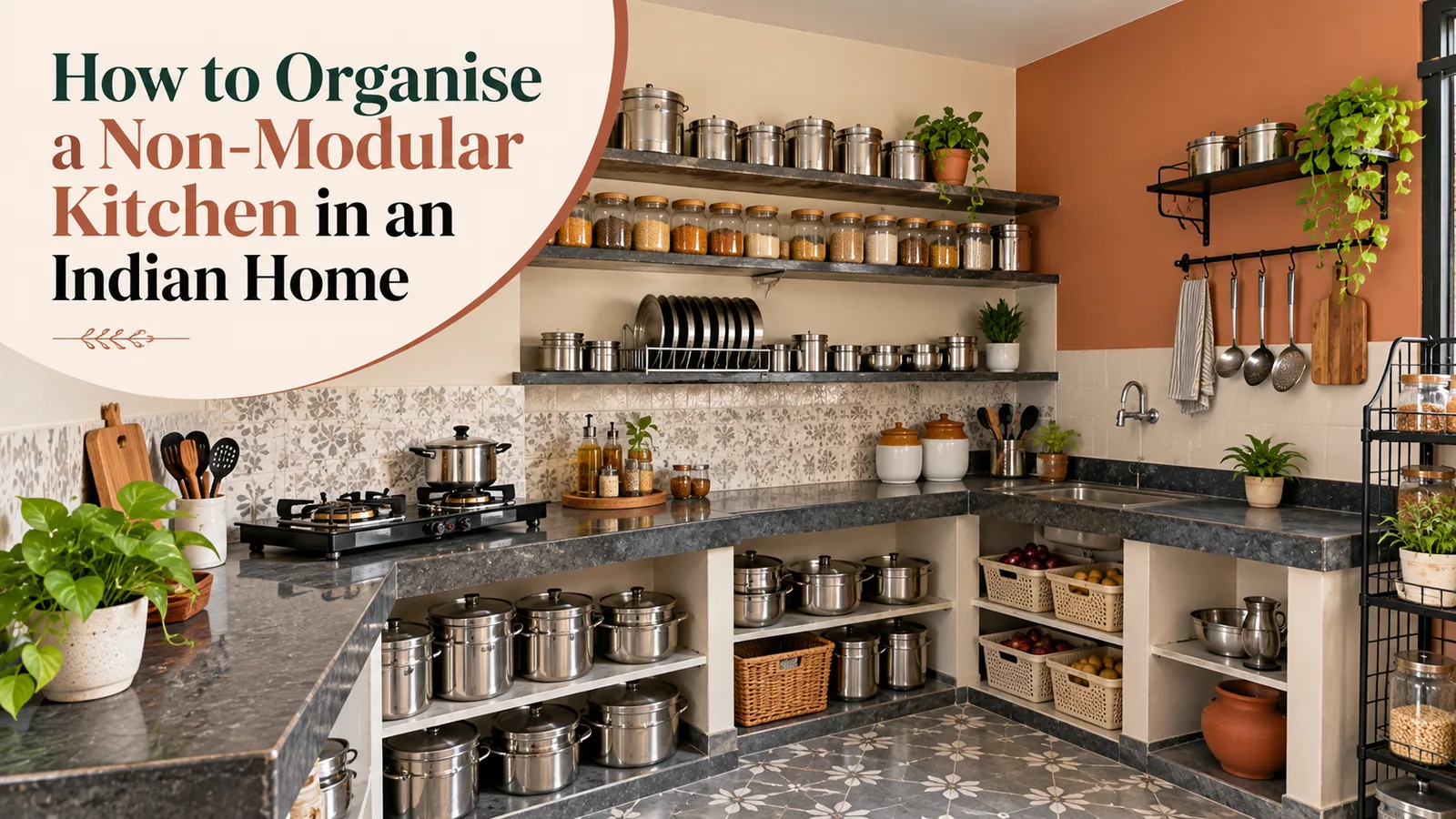
Good kitchen storage is not about fitting as many accessories as possible. It is about giving each thing you own a place that matches how often you use it, how heavy it is and where you use it. In Indian kitchens that means planning for monthly grain stock, a large number of vessels, daily masala and plenty of thalis, and placing each near the task it belongs to.
This guide shows how to plan storage before the kitchen is designed: count what you own, map it to zones, then choose the units that suit each zone.
Start With a Storage Count
Before choosing any trolley or pull-out, make a quick list of what you need to store. It takes an hour and prevents most storage mistakes:
Grains and dal: how many containers, and how much monthly stock?
Vessels: how many pressure cookers, kadhais, tawas and large pots?
Everyday tableware: thalis, plates, bowls, glasses.
Masala and oils: how many daily-use jars and bottles?
Crockery and occasional items: dinner sets, festival cookware.
Small appliances: mixer, kettle, toaster, OTG.
Take this list to your kitchen designer. It is far more useful than choosing accessories from a catalogue.
What Goes Where: A Zone-by-Zone Plan
Item | Best place | Unit that suits it |
|---|---|---|
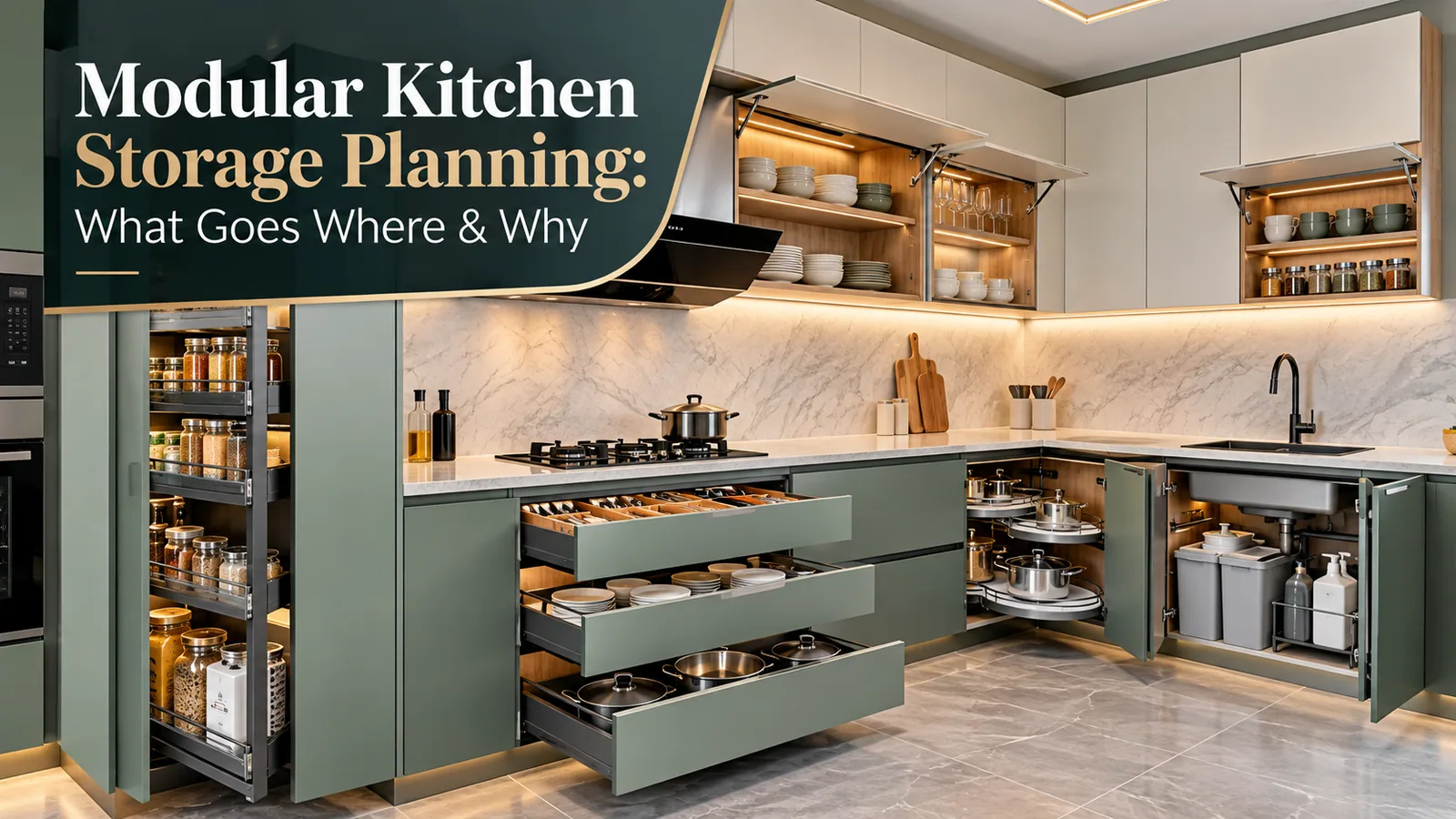
Daily masala | Beside or just below the hob | Shallow drawer with spice insert, or narrow pull-out |
Oils and tall bottles | Next to the hob | Narrow bottle pull-out |
Pressure cookers, kadhai, tawa | Below the hob | Deep drawers with full-extension channels |
Ladles, spoons, knives | Top drawer near the prep area | Cutlery or utensil organiser |
Thalis and plates | Near the sink or dining side | Plate rack drawer or wall unit rack |
Atta, rice, dal | Tall unit or deep base drawer | Pantry pull-out or grain drawer |
Cleaning supplies and bin | Under the sink | Open base with pull-out bin, raised off the floor |
Crockery and glassware | Wall unit away from the hob | Glass-shutter or closed crockery unit |
Occasional and festival items | Loft | Lift-up or hinged loft shutters |
Base Units: Drawers Do Most of the Work
Deep drawers in the base units store more usable space than shelves behind shutters, because you can see and reach everything from above. Put the heaviest vessels in the lowest, deepest drawers near the hob, and match the channel’s load rating to what the drawer will hold. Our kitchen hardware and accessories guide covers channels, tandem boxes and baskets in detail.
Tall Units and Pantry Pull-Outs
A tall unit turns height into storage and is the best home for grain stock and packaged food. Pantry pull-outs usually need a width of about 300 mm or more, and narrow bottle pull-outs commonly come in widths from about 150 to 300 mm. Place the tall unit at the end of a counter run so it does not break up your working surface.
Wall Units, Crockery Units and Lofts
Wall units hold lighter, daily items at eye level: tea, coffee, snacks and everyday glasses. Crockery is safest in a wall unit away from the hob, with glass shutters if you want to display it. Lofts above the wall units are ideal for festival cookware and spare stock, as long as you plan a safe way to reach them.
Corners and Awkward Spaces
In L- and U-shaped kitchens, the corner is either the most wasted or the most useful space. A corner mechanism brings items out into reach. Small gaps beside the fridge or at the end of a run can take a narrow pull-out rather than a filler panel. Plan these spaces with your modular kitchen dimensions so every unit fits the wall exactly.
Common Storage Mistakes
Choosing accessories before counting what you own.
Too many wire baskets, which let small items fall through.
Heavy vessels in wall units or in light-duty drawers.
Masala stored far from the hob.
No plan for monthly grain stock.
Open shelves near the hob, which collect oil and dust.
How Reedify Plans Kitchen Storage
Reedify Modulars manufactures cabinets at its own factory in Rohtak to your site measurements, so drawers, pull-outs and tall units are sized to your walls and to what you store. We fit the hardware brand you prefer and list every storage unit on the itemised quote. To plan storage for your custom modular kitchen, bring your storage count to the design discussion.