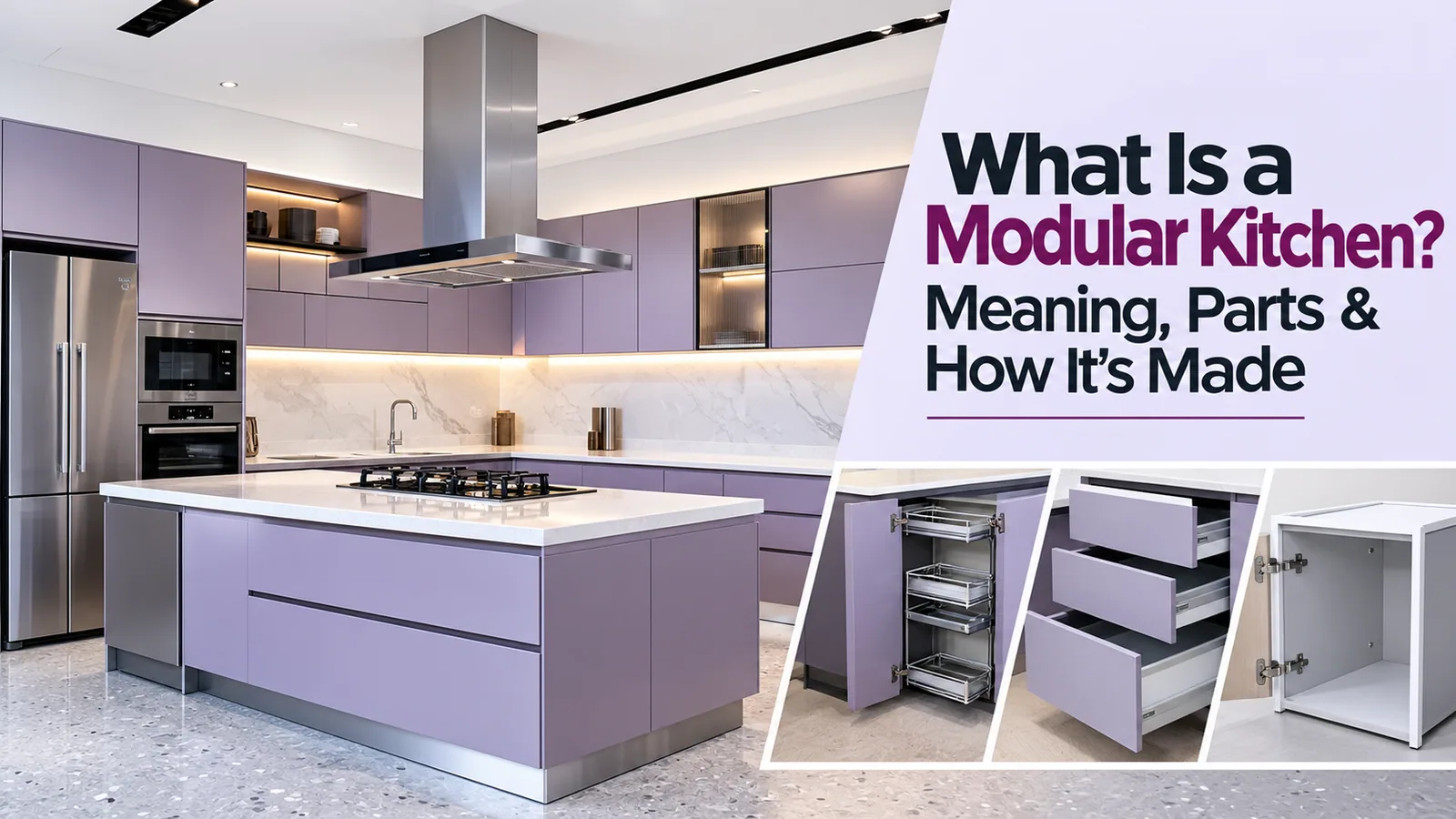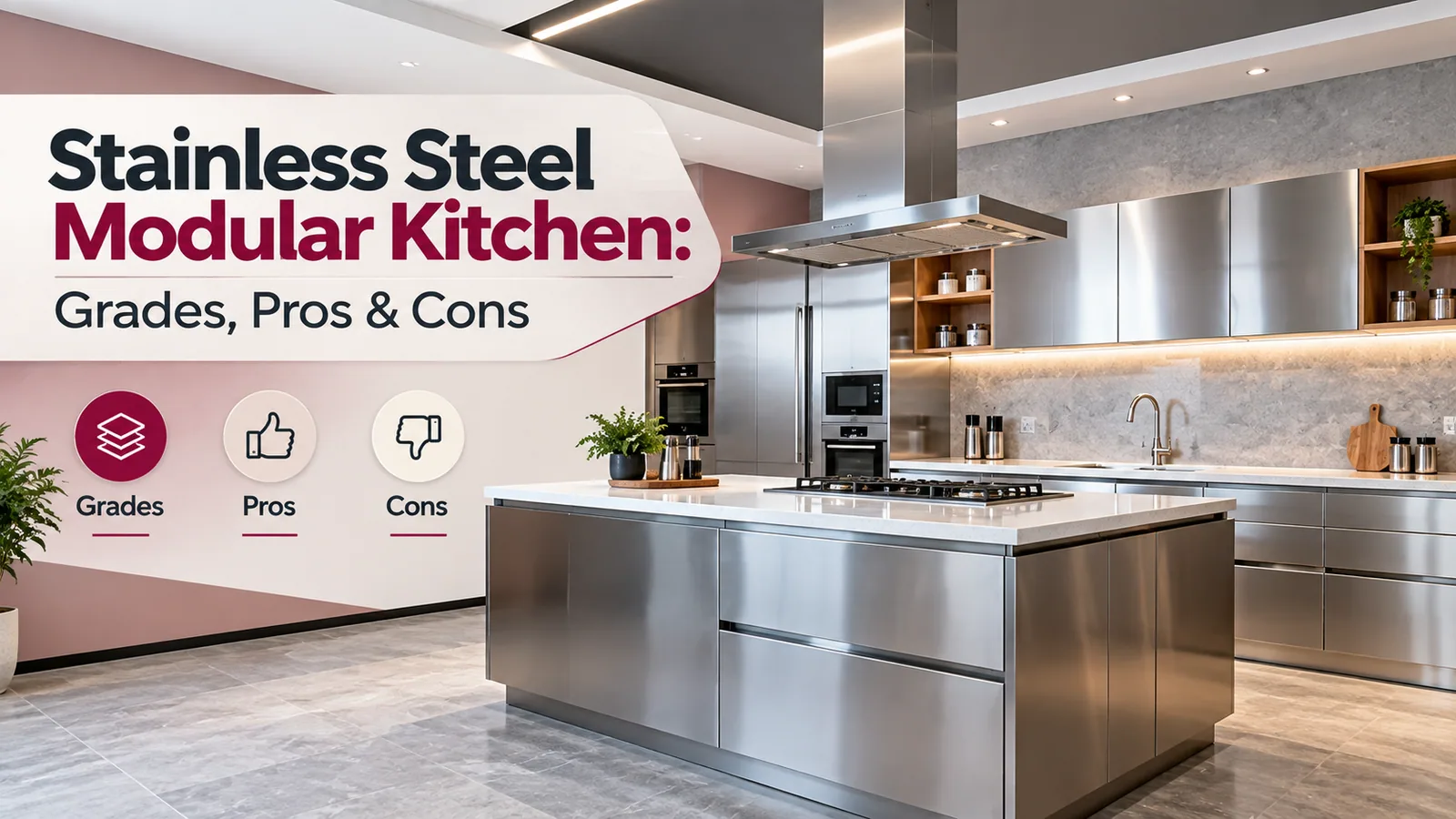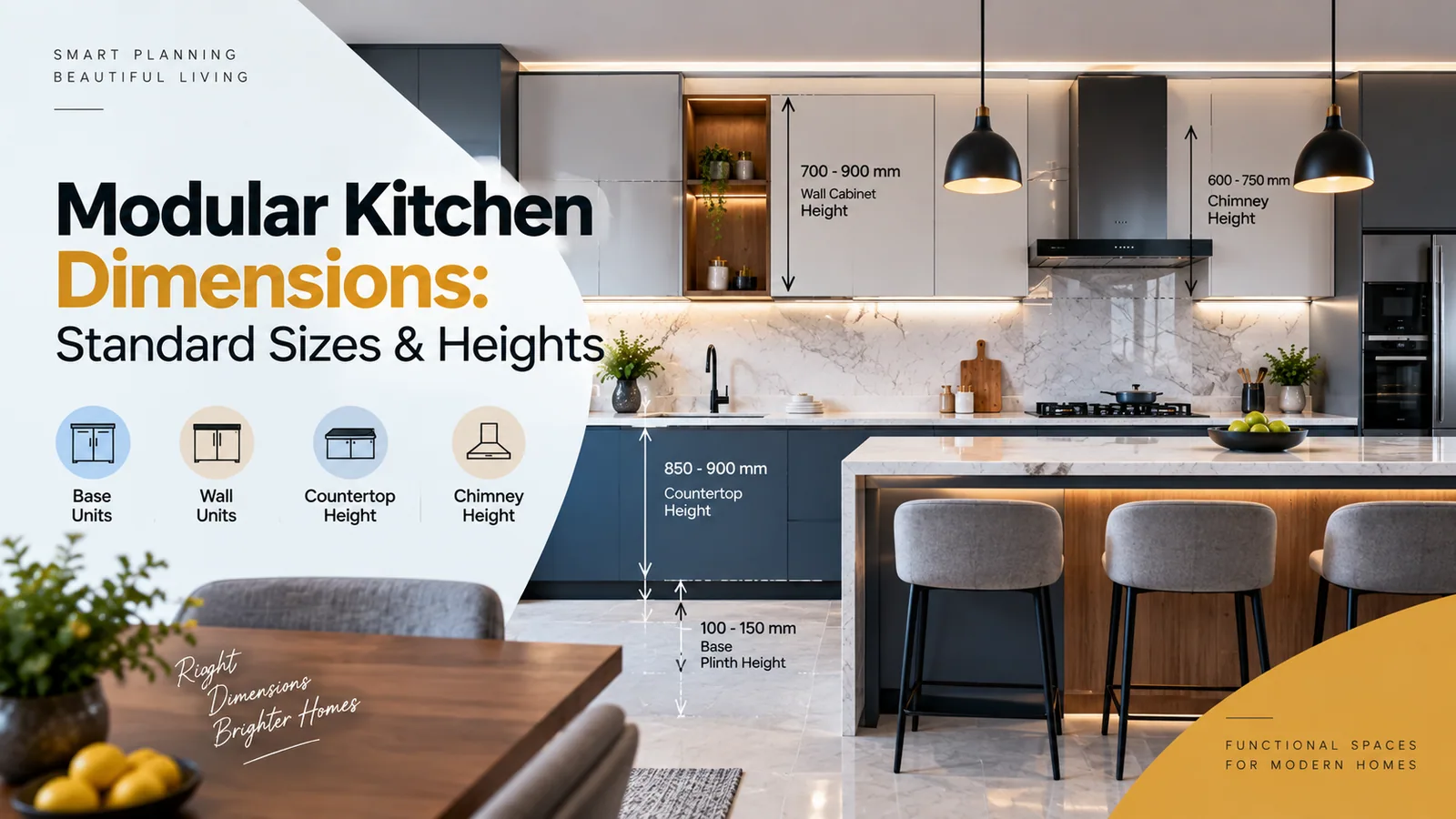
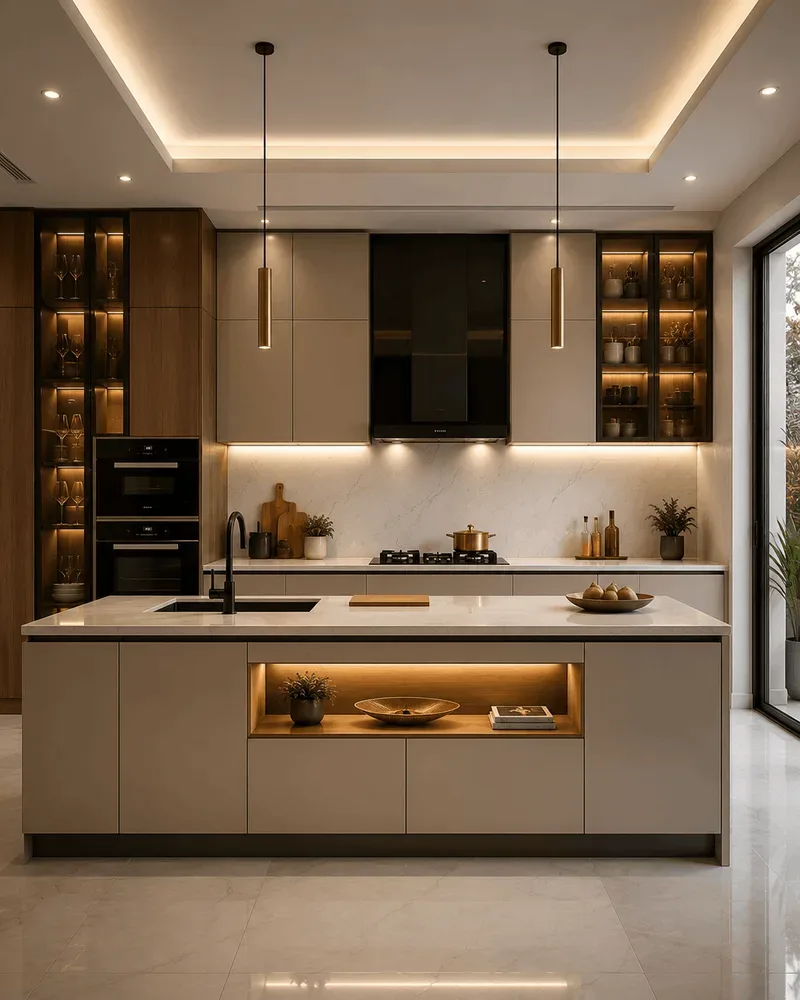
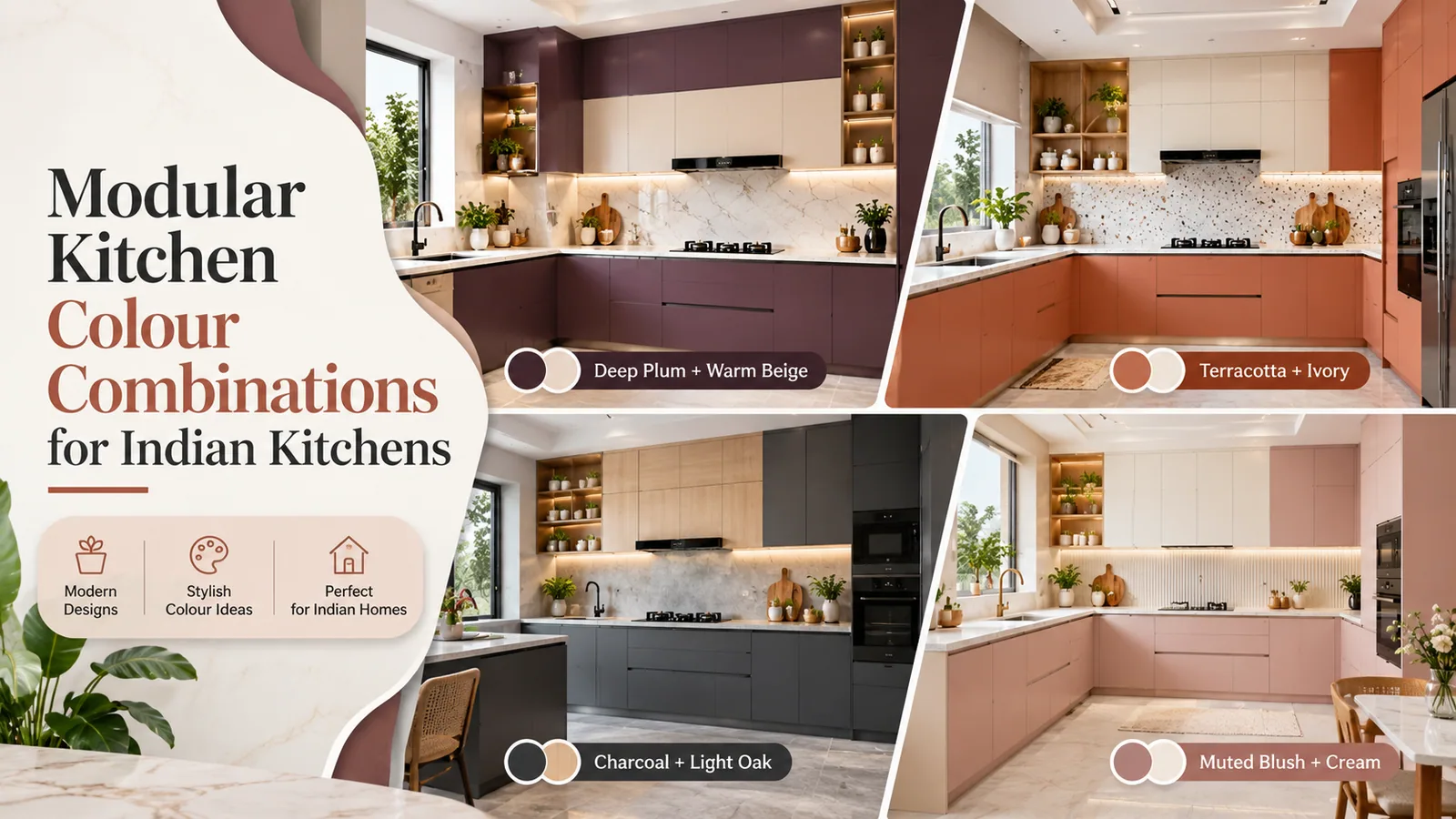
The best modular kitchen colour combination is one that suits your room’s light, your cooking and how much cleaning you want to do, not just one that looks good in a photo. In most Indian kitchens, a practical approach is a darker or mid-tone colour on the base cabinets, where hands, feet and spills land, and a lighter colour on the wall cabinets to keep the room bright. The finish you choose then changes how that colour looks and how marks show.
This guide explains how to choose colours that work day to day, which combinations to shortlist, and how to test them before you decide.
Start With Light, Cooking and Cleaning
Light: a small or north-facing kitchen with little daylight benefits from lighter wall units and a lighter backsplash. A bright kitchen can carry darker colours without feeling closed in.
Cooking: heavy daily cooking with oil and spices means splashes near the hob. Very light matte surfaces there can show turmeric and oil marks, so test samples before committing.
Cleaning: dark gloss shows fingerprints and dust, while very light gloss shows smudges. Mid-tones in matte are the most forgiving.
How Finish Changes a Colour
The same colour looks different in different finishes. Gloss, acrylic and painted gloss make colours look deeper and richer, and reflect light around the room. Matte laminate and matte PU soften a colour and hide marks better. When you shortlist a colour, decide the finish at the same time. Our kitchen finishes comparison explains how each finish behaves.
Simple Rules for Two-Tone Kitchens
Use the darker colour on base cabinets and the lighter one on wall cabinets, so the room feels taller and lighter.
Keep to two main colours and one accent. A common guide is roughly 60 percent main colour, 30 percent second colour and 10 percent accent.
Link the colours to something fixed in the room: the countertop, flooring or backsplash.
Use wood grain as a warm neutral that pairs with almost any solid colour.
Colour Combinations to Shortlist
Combination | Effect | Watch out for |
|---|---|---|
White and wood grain | Warm, bright, timeless | White near the hob needs frequent wiping |
Grey and white | Clean, modern, calm | Pick a warm or cool grey to match your flooring |
Dark blue base, white wall units | Rich and fresh; hides marks at the bottom | Needs good lighting so blue does not look black |
Sage or olive green and beige | Soft, natural, relaxing | Check the green in both daylight and warm light |
Charcoal or black and wood | Bold and premium | Dark gloss shows dust and fingerprints |
Beige and brown | Warm and forgiving with spices and oil | Can look dull without a lighter backsplash |
Neutral base with a single accent colour | Personal touch without overwhelming the room | Keep the accent to a few shutters or open shelves |
Match Colours With Countertop, Backsplash and Flooring
Cabinet colours are only part of the picture. A dark granite countertop pairs well with light or wood-grain shutters; a light quartz countertop suits deeper base colours. The backsplash can tie the two together or add a contrasting pattern. Always check cabinet samples against a real piece of the countertop and a floor tile, not only on screen.
Test Colours Before You Decide
Shortlist two or three combinations, not ten.
Get physical samples of the finishes in those colours.
Look at them in your kitchen in daylight and under your evening lights.
Hold them against your countertop and floor samples.
Check how a smear of oil or turmeric looks and how easily it wipes off.
Ask for the brand and shade code to be written on your quote.
Colours and Finishes at Reedify
Reedify Modulars makes shutters at its own factory in Rohtak in laminate, acrylic, PU paint, painted gloss and glass, with matte and gloss options. Laminate colours depend on the brand you choose, and painted finishes such as PU are available in a wide range of shades. To see colours in finished kitchens, browse our kitchen portfolio, or plan your custom modular kitchen with our team.