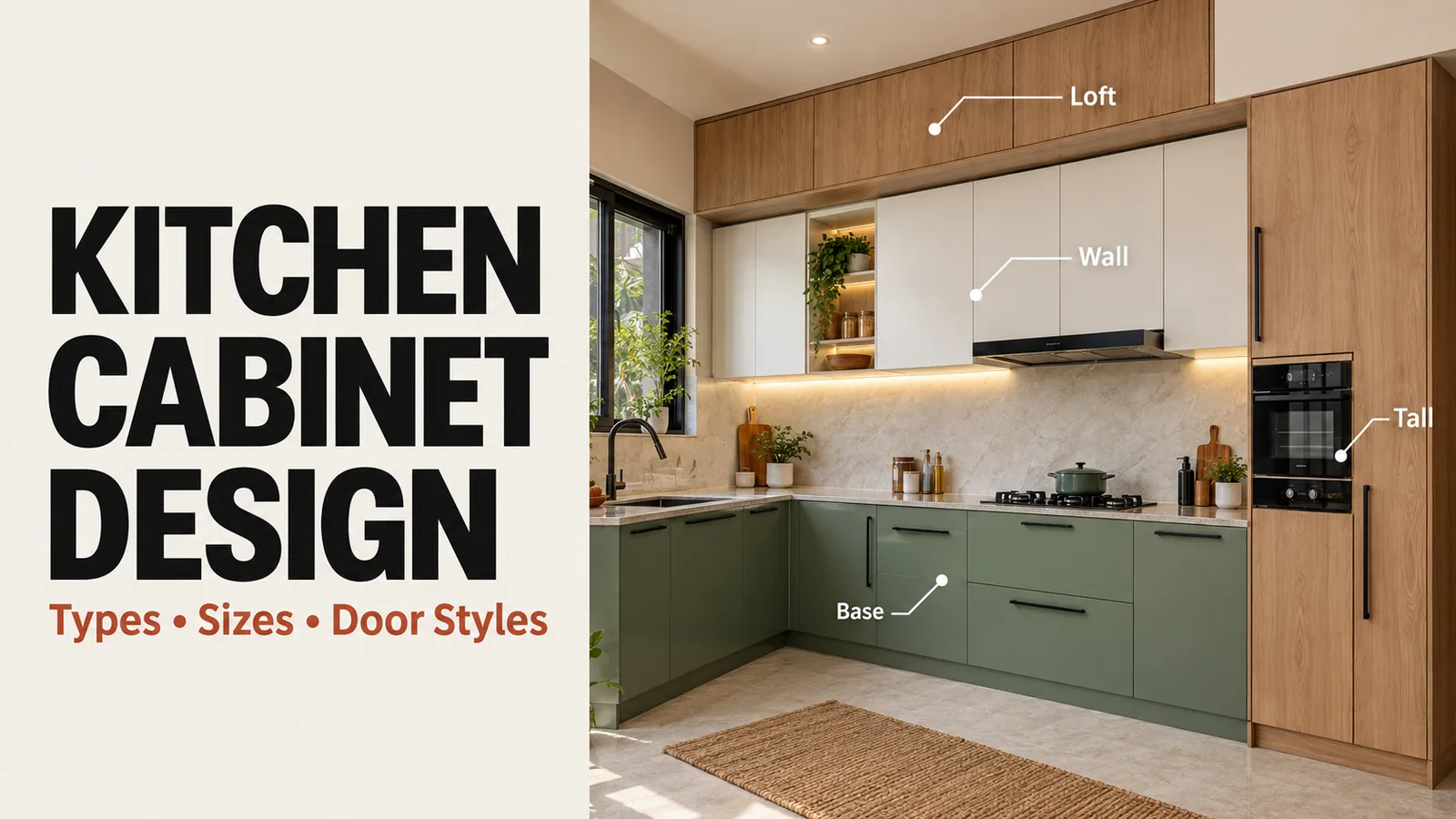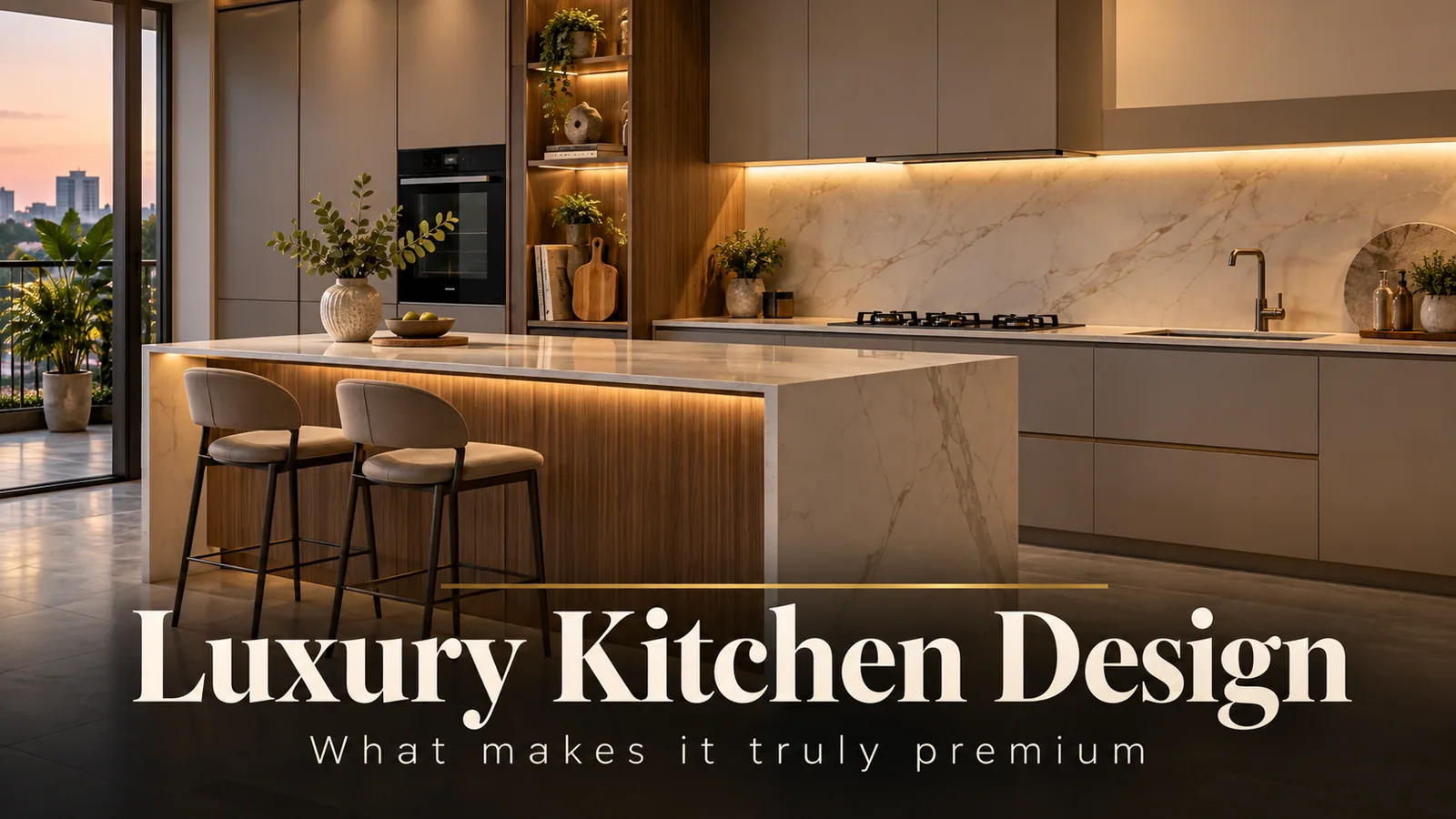
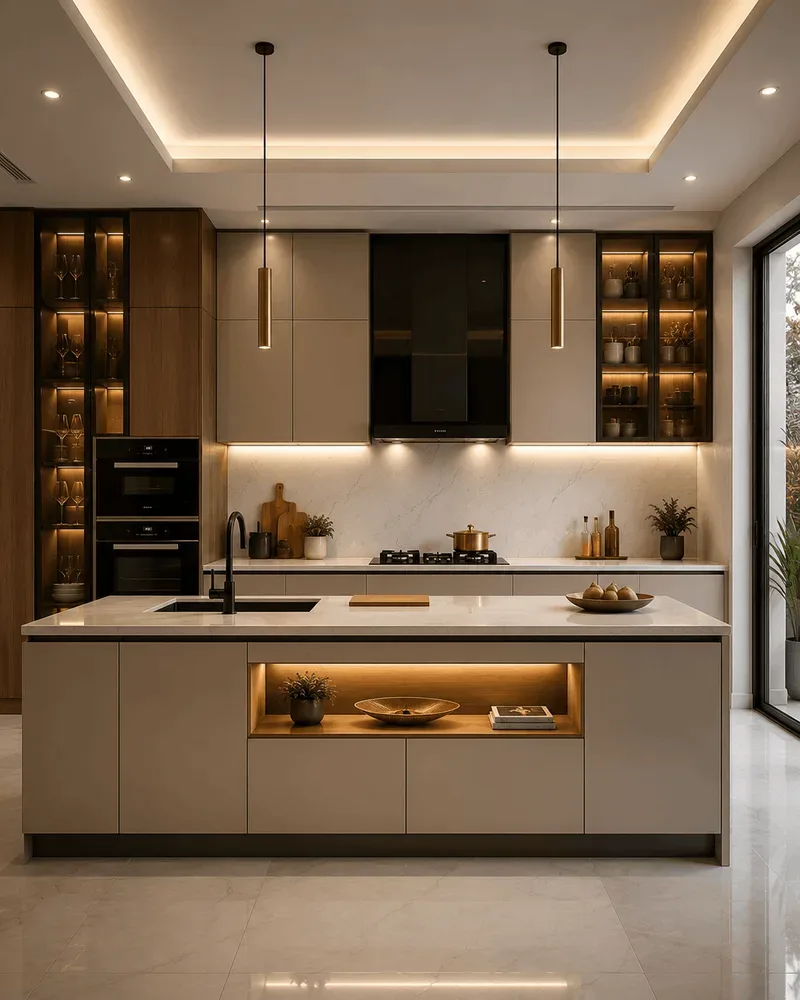

"What will my L-shaped kitchen cost?" is the first question almost everyone asks — and the hardest to answer with a single number, because two L-shapes of the same size can be priced very differently. One contractor quotes ₹1,800 per square foot, another ₹12,000 per running foot, a third says ₹2.5 lakh "all-in" — and they may all be describing the same kitchen using different conventions. This guide explains how L-shaped modular kitchen pricing actually works, what genuinely moves the number, honest market ranges you can sanity-check a quote against, and why a factory-direct kitchen costs less than the same kitchen from a showroom. It will not hand you a fake figure — it will make you hard to overcharge.
How L-Shaped Modular Kitchen Pricing Actually Works
A modular kitchen is priced on the length of cabinetry it needs, the materials that go into it, and the hardware and accessories inside. An l-shaped modular kitchen usually needs less cabinetry than a U-shape or a wrap-around layout because it uses two runs instead of three, which is exactly why it tends to be the more cost-efficient choice for most Indian homes.
Running feet vs square feet vs lump sum
Per running foot (RFT): the linear length of the base and wall cabinets combined. This is the most common and most transparent method — it scales cleanly with how much kitchen you are actually building.
Per square foot: based on the cabinet face area. Fine as long as you know exactly what is included, because the same rate can hide very different hardware and finishes.
Lump sum ("all-in"): one figure for the whole kitchen. Convenient, but only comparable if you make each vendor list what is inside it.
The trap is comparing a per-RFT quote against a lump-sum quote and assuming the cheaper headline wins. Always convert every quote to the same basis and the same inclusions before you compare — otherwise you are comparing a kitchen with soft-close drawers against one with plain shutters and calling them equal.
What Drives the Price of an L-Shaped Kitchen
Size is only one lever, and rarely the biggest. These five drivers explain why two identical footprints can differ by lakhs:
Cost driver | What it changes | Impact on price |
|---|---|---|
Run length / size | How much cabinetry and material you need | Direct and large |
Carcass material | Particle board vs HDHMR vs plywood — strength and moisture resistance | Moderate to large |
Shutter finish | Laminate vs acrylic vs PU vs glass — look and maintenance | Large |
Corner + internal hardware | Carousels, pull-outs, tandem drawers, soft-close channels | Moderate, adds up fast |
Countertop + accessories | Granite or quartz counter, tall units, appliance planning | Moderate to large |
Hardware and storage accessories quietly add a meaningful share of the total — soft-close drawers, a corner pull-out and a tall pantry can shift a quote by 20–30%. That is money well spent if you use those features daily, and wasted if a salesperson loaded them in. Knowing which is which is the point of understanding the drivers.
Indicative Price Bands by Finish (General Market Context)
The numbers below are general 2026 market ranges across India, not a Reedify quote — they exist so you can gauge whether a figure you have been given is broadly reasonable. Your actual price depends on your exact runs, materials and hardware, and rates vary by city. Reedify prices are quoted only after a free site measurement, because every kitchen is custom.
Shutter finish | Typical market range (per sq ft) | Character |
|---|---|---|
Laminate | ~ ₹1,000 – ₹1,800 | Durable, budget-friendly, huge range of designs |
Acrylic (high gloss) | ~ ₹1,800 – ₹2,400 | Reflective, modern, premium look |
PU paint | ~ ₹2,500 – ₹3,200 | Seamless, handleless, high-end finish |
At a whole-kitchen level, most L-shaped modular kitchens in India in 2026 fall broadly between ₹1.5 lakh and ₹5 lakh, with compact laminate kitchens at the lower end and larger kitchens in premium finishes with branded hardware at the upper end. In Delhi NCR specifically, mid-range kitchens commonly land in the ₹3–6 lakh band, and premium projects can go higher — a useful reference if you are pricing a modular kitchen in Gurgaon or elsewhere in the region.
A Realistic Cost Breakdown for a Standard L-Shape
Rather than one number, think of your kitchen as a stack of line items. A transparent quote should let you see and question each one:
Base cabinets — the workhorse storage along both runs.
Wall cabinets — upper storage; taking these to the ceiling adds cost but a lot of usable space.
Shutters and finish — the single biggest style-and-price lever, from laminate to PU.
Hardware — hinges, channels, soft-close, and the corner solution.
Countertop — granite or quartz, priced by material and length.
Accessories — tall units, pantry pull-outs, tandem drawers, spice and bottle pull-outs.
Installation — fitting, alignment and finishing on site.
Appliances — chimney, hob, oven, sink and RO — are usually quoted separately, so always ask whether a headline figure includes them. A quote that lists every line by material, brand and unit is a quote you can trust; a single opaque number is one you cannot.
Why a Factory-Direct L-Shaped Kitchen Costs Less
The biggest hidden line in many kitchen prices is not a material — it is margin. A dealer-led or showroom kitchen passes through layers before it reaches you: the brand, the franchise, the showroom overhead and the salesperson's commission. Each layer adds a cut, and across the market a branded showroom often prices well above the same materials fitted by a direct manufacturer.
Reedify manufactures in its own factory in Rohtak and supplies direct — there is no dealer or middleman margin added on top. The price reflects your materials, hardware and labour, not a chain of resellers. You can see exactly how that working model is structured: site measurement, a 3D design and a fixed itemised quote you approve before anything is cut, in-house manufacturing, then installation by the same team. Every kitchen is backed by warranty support of up to 10 years*, so lower cost does not mean lower accountability.
Because the L-shape already uses less cabinetry than a u-shaped modular kitchen of similar footprint, combining the efficient layout with factory-direct pricing is often the most cost-effective way to get a genuinely modular kitchen rather than a repackaged carpentry job.
How to Read an L-Shaped Kitchen Quote Without Getting Overcharged
Convert everything to one basis — per RFT with the same inclusions — before comparing vendors.
Check the carcass material by name (particle board, HDHMR or plywood) — it is easy to quietly downgrade after the quote.
Confirm the hardware brand and whether soft-close is included, not just "premium fittings".
Ask what the corner solution is — a dead corner is lost storage you paid for.
Separate appliances from cabinetry so you are comparing like with like.
Insist on an itemised, fixed quote tied to a design you have approved.